12 September 2016

Ichthyosis in developing countries - India


Last week, an article was published about two young siblings in India living with Lamellar Ichthyosis. The article describes the children as having snake skin.

Sayali (13) and Siddhant (11) Kapase live in Pune, India. The children, along with the parents, Sarika and Santosh Kapase, spoke to journalist Charnamrit Schadeva about the struggles of living with Ichthyosis.

The journalist's Twitter account shows she specialises in writing about children with facial disfigurements and rare medical conditions. The article about the Kapase children sits above previews of these types of articles. Like many other articles about Ichthyosis, the language is disempowering, and while it does raise awareness of the condition, it also heightens stigma. (One article about the children in a different publication came with a graphic image warning.)

The article covered the treatment the children undergo, and comments from a dermatologist (he assures readers the parents are not related, and speaks of the parents both having a "mutated gene", so Ichthyosis "was unavoidable for the children". But it's the attitudes towards the condition that concern me.

My heart hurts for these children, who do endure prejudice and exclusion from "frightened locals" because of the way they look. They were denied entry into several schools, and the children at their current school are too scared to play with them. They have little confidence in themselves, and really, can anyone blame them?

From the article:

"Sayali, 13 said: "I'm disgusted when I see myself in the mirror. I wonder why God made my brother and me this way. People call us names like ghost and witch. I aspire to be an accountant but I wonder if anyone would offer me a job with this condition."

The article continues:

"Sarika now worries for Sayali's marriage prospects in the future and wonders if any man would accept her as a bride."

"I cannot dream like other mothers do for my daughters wedding", she said. Every mother has aspirations to see her daughter growing up and getting married. I do not feel the same. No mother would like to see her children in this condition."

It's terribly sad that even their parents have given up hope. I hope that they can see that there are many of us with Ichthyosis who have been educated, found love and have good lives. If their parents do not have hope, how can the children feel good about themselves?

What I hope this family can know:

  • Your children are beautiful, smart, articulate and kind.
  • You are not alone.
  • There is support out there. There are Facebook groups to connect with other parents and children, blogs (mine, DeDe's, Courtney's, Mui's and more.) The Ichthyosis Support Group and FIRST have good resources too.
  • Never be ashamed of your children.
  • Many people with ichthyosis lead active and fulfilling lives - with education and careers, relationships, friendships and travel.
  • Medical support is important but emotional support is just as important.
  • Focus on managing the condition day to day instead of worrying about the future.
  • Pride and esteem in your children starts with you. Be proud of your children - and express this pride to people you meet.
  • Self love is important. If these kids can love themselves, then love will come to them.
  • Please be careful what you say to the media. Media covering Ichthyosis can be exploitative and voyeuristic. This can have a huge impact on your children's esteem as well as the wider ichthyosis community.
  • It gets better.

A friend sent me this article in the Guardian the same day I read the article about the children in India. The article addressed the way girls and women with disabilities are treated in countries like India, where women are expected to marry - except women with disabilities are not.

Nidhi Goyal writes:

"Kasturi, an Indian girl with polio, wants to marry but her mother believes no one will have her because she will probably be unable to take care of the house.

Women with disabilities make up roughly 5% of the world’s female population, yet many are not considered "woman enough". Their capability is questioned – can she cook? can she raise children? – along with their sexuality and entitlement to equity or rights. If they fail to meet idealised expectations about how a woman’s body should look, they are deemed incapable of providing care.

Sadly, this view of women with disabilities being "broken" or of less value has been adopted by the women’s rights movement, which has been slow to make space for them – if not actively resistant."

Reading Nidhi Goyal's words made me think of the (low) expectations Sarika Kapase has for her daughter Sayani's future. But I was very aware of me not being the right person to make an informed comment on the family's despair. I can't fully address this without coming across as a first world privileged white (red) saviour.

While I have lived with Ichthyosis my whole life, I don't know what it's like to live in developing countries.

I experience staring and comments, and the pain of course, but in Australia, the stigma around the condition is almost incomparable. I acknowledge my western privilege and also the complexities of visible difference and disability in other cultures.

While I wrote "it gets better" in my advice list, I don't think the attitudes and access to treatment in developing countries ensure that it does get better.

So I asked my friend Tina to write about her experience with ichthyosis in India. Tina has written her story here before, and some readers donated through this blog so she could get a cooling vest. Tina has the same type of Ichthyosis as the Kapase children.

Here's Tina's story of what it's like to live with Ichthyosis in India - from the physical aspects to the reactions and ignorance of other people.

"I was born as a colloidal baby with severe or chronic type of Lamellar type 3. I have severe challenges handling both cold and hot temperature. I work as a Training consultant.

The reaction of people is quite visible, The facial expressions , some stare and some just don’t like the sight of me, it seems they are horrified by my sight, I am emotionally, mentally and physically down in every aspect. Every time I think today will be a nice day, but the snide comments and stares all mar my day.

I started taking Acetretin since 3 years. From my bath , scrubbing, washing and creaming it takes 3 hours to get ready. I am totally exhausted and drained even before my day begins. Simple chores seem a herculean task. I wear clothes that cover me from head to toe, be in Summer, Winter or Autumn. I spend ¾ of my salary on the medicines, Vaseline, creams, Glycerine. Icthyane, Glyco A cream, Band aids, Cotton bandages and swabs, Eye drops to prevent eyes from drying. I have bathe 2-3 times a day and wash face and hands many times at work as skin gets dry, scaly and poky all over.

I do not have any medical treatment available in India. The dermatologists are still clueless about my condition. The medicines and creams and lotions that I use is from the ideas and suggestions shared by FIRST group that I met on Facebook 4 years ago. Indian government should include Icthyosis under sever disability category. I cannot take leave from work as they say if you want to work here you have to be healthy. The people in the corporate world also should understand us. At work place, I told my colleague that I have to travel to see a visiting dermatologist, he was coming from London and I wanted to go, The colleague says you can go next time, They are that ignorant in India.

It’s not only the superficial layer of skin that is affected, Due to Ichthyosis, I have very low levels of Calcium, Vitamin D, Vitamin A, Vitamin E, Potassium and Magnesium, all these minerals are deficient or absent. My head and scalp are so bad that it scales, sheds and itches very badly. I scratch so violently that the scarce or just a handful hair falls, making it even scantier. Even if I squat or sit on the ground the skin stretches in several places and immediately snaps and fine cuts appear all over. I do not remember a day being free from physical pain. I feel it’s a part of me now. Pain and I are synonymous with each other.

I am highly Myopic and the being visually also makes my life difficult. I am blind in right eye due to Glaucoma. The left eye is highly short sighted.

The reactions to my skin changed over the years, but just a little. Very few understand and empathize. There are some who blatantly tell that I ask for self-pity, I get upset when I do the same amount of work that others do but for me I go through a lot of pain physical and emotional and still they do not acknowledge and this makes me more bitter.

Parents and Family are the greatest support system. I am proud that my Mom was my biggest support system. People treated her badly saying that she was a sinner that’s the reason I was born in this condition. My own cousin called me names as I have leprosy, she is married and 40 years.

There is a Man Called Sai Charan from Nalgonda. He has Lamellar Ichthyosis . He never used Vaseline or Glycerine as his dermatologist never suggested anything. He uses only coconut oil. He is looked after by his old grandmother who earns a meager income. He is worried about his future and always is depressed. He says that life is laborious for him. He does not know that we all go through the same stage. There is Nagesh from a remote village in Telangana. He has two sons who are affected by Lamellar Ichthyosis. He too is seeking financial assistance from the government, but no avail.

There is a lady, Gloria, who has Vulgaris Ichthyosis, I buy her soaps a, Vaseline and Glycerine for her. She works in a school. Her hands and feet are cracked and bleed as she is constantly in water. The Principal of the school does not allow her to work inside the school and she is outside in the hot sun the entire day. The School Principal says that she cannot allow Gloria to work indoors as the school children will get frightened and scared by her appearance.

Even in the church she sits behind in a corner as people don’t sit next to her because of the odour that emits.

I get angry and upset when I see such articles. How can educated people use such statements? I feel they don’t have values.

[To those without ichthyosis and disabilities]: Please understand that what we have and go through is not easy for us. We are already Physically, Emotionally and Mentally distraught. We too long to lead a normal life . There are many things we cannot do, as the pain in the bones is almost crippling. And the cracks and fissures are painful and bleed under duress. Please understand us and have patience with us."

I wish Siddhant and Sayali all the very best with their treatment, and I hope they reach a level of positive self acceptance once day. I hope this post is passed on to their parents and their community.

If you live in India and want to tell your story of life with Ichthyosis, you are most welcome to leave a comment below.

This is the first post in my series "Ichthyosis in developing countries". The next post will be published soon.


09 September 2016

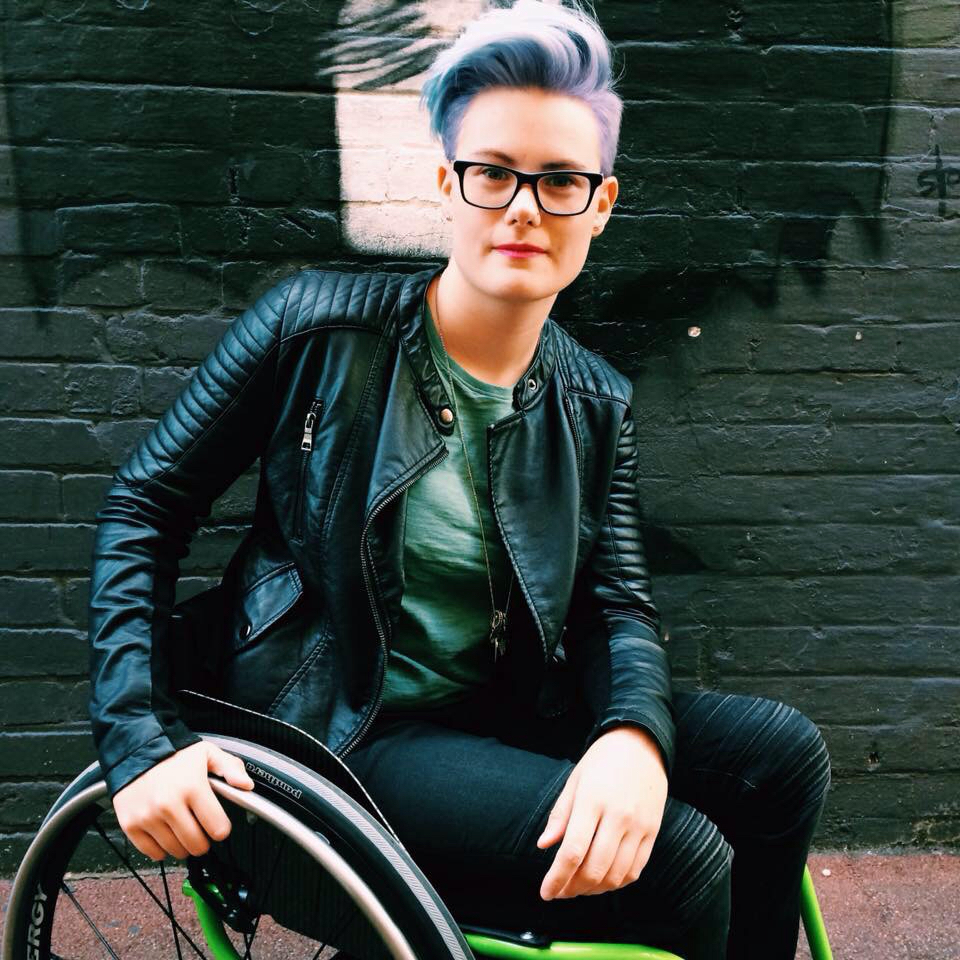
Robyn Lambird and Madeline Stuart - Aussie models with disabilities rocking the fashion world.

Robyn Lambird and Madeline Stuart - Australian models with disabilities rocking the fashion world.


It's an exciting week for disability-inclusive fashion - from chainstore to runway. Two young Australian women featuring in the Target catalogue and in New York Fashion Week.

This week, Target features a young woman with a disability in its catalogue. Robyn Lambird, who uses a wheelchair, models activewear. Above her smiling face, she's quoted: "As a para athlete, I practically live in activewear. That's why I love Target's range - it's got me covered for the who,e day. With plenty of options for working out, and fashionable pieces, that are perfect for busy days in between training sessions."

I chatted with Robyn, who has cerebral palsy, about how modelling for Target makes her feel.

"Oh man, it’s awesome! I’ve been talking about the importance of having more adequate media representation for a while now, so to play apart in that is really cool. For me it’s all about normalising disability, I want to get to a point where it’s commonplace to see people using mobility devices, or with missing limbs, and a whole range of other conditions in our advertising."

Robyn hopes her appearance in the Target catalogue leads to standard inclusion of disabled models.

"We need to get to a point where including disabled models in advertising is standard", she says. She believes companies that pride them on diversity need to reflect that, through representing all types of people - including people with disabilities. Robyn believes representation in advertising will help increase disability's cool factor.

"As a society we also need to change the way we look at disability - a lot of people write the disabled community off straight away as not being trendy or cool. I know models for instance who can’t get casting agents and have been told by them that 'disability isn’t their look'", Robyn laments.

Catia Malaquias , mother to seven year old Julius who has Down syndrome, campaigns for inclusive advertising through Starting with Julius. She agrees with Robyn's take on inclusion changing perceptions of disability.

"Advertising in particular can be extremely powerful as a medium. Ads are pervasive and far reaching – we see ads on our social media, favourite blog, a web page, before a movie or during our favourite TV show – and they are designed to impact our perception of the world around us. For the most part they represent a world without disability and with minimal human diversity and that both reflects and reinforces social exclusion and devaluation of "difference". Inclusive advertising seeks to disrupt that."

Julius and Catia from Starting with Julius

Target has regularly featured children with disabilities, but Robyn (and I) would like to see more adults with disabilities included in Target's catalogues.

"It’s kind of crazy to think that 1 in 5 people will experience disability in their lifetime, yet as far as I’m aware I am the first adult with a visible disability to feature in a nationwide advertising campaign of major retail company in Australia. If people don’t see individuals with a range of disabilities in our media, it’s easy for stereotypes to form and for misconceptions to thrive", Robyn says.

Therese Waters from Target's Corporate Affairs team assured me it's not the first time a disabled model has featured in Target's catalogues. "In the 1990’s we featured a model in a wheelchair", she says.

Therese said it's important for Target to reflect Australia's diverse society. "One in five people in Australia have a disability so that needs to be portrayed in our marketing materials", she says.

She told me she hopes that through Target's diverse advertising campaigns, perceptions about people with disabilities are shifted.

The inclusion of disabled in advertising campaigns makes both models and the wider disability community feel valued and represented. "It’s important that our customers know we’re all about making people feel confident about themselves. Our uniqueness should be embraced", Therese says.

While inclusion in fashion advertising is a great start, Robyn also believes the fashion industry needs to make clothes more accessible for people with disabilities.

"There are a few brands out there that design for disabled people and wheelchair users, that I really admire but I’d love to see a little more diversity. I’d really like to see more options for disabled teens and young adults as a lot of accessible clothing is aimed either at children or older people . I love bright colours and wacky prints so if I ever got into designing I’d be sure to incorporate that.

"For me as a wheelchair user it all comes down to how things look when I’m seated, things don’t always fit as nice in the chair. I also find buttons and things like that a little tricky because the dexterity in my hands isn't so great, so that’s always something to consider", she says.

She hopes to model for Zara and G-Star Raw - and I'm sure she will be noticed by those brands and more. She continues to make opportunities happen by telling her story, not through fashion but words - using her blog and Youtube channel () to change people's perceptions of disability.

Robyn isn't the only Australian to rock the fashion world this week.

On Saturday, Madeline Stuart will be modelling in New York Fashion Week. Nineteen year old Madeline has Down syndrome and has been modeling since 2014. She told her Mum Rosanne that she wanted to become a model after attending a fashion show, and after posting professional photos on a public Facebook page, her career took off quickly.

This is her third time at the New York event - perhaps the most high profile of the fashion calendar.

Madeline Stuart at New York Fashion Week 2014

This fashion week, Madeline will model androgynous label Speechless Vulgarity - their clothes are designed to promote self confidence. The label's motto is "Be dope be love be you", which symbolises Madeline's self confidence.

With the help of her mother, Madeline told me what she enjoys about being a model. She loves meeting fantastic people and travelling the world. But it's hard work too, she says. The hours are long and she's on the road all the time. She has some frank advice for other people with disabilities who want to get into the modeling industry.

"If you want to be in the modelling industry you need to be really fit as it is very hard work and very long days. Plus you need to have really good self-esteem as it can be very critical."

The long hours and time away from home is worth it though, for the rush of New York Fashion Week. "I love it, it is my favourite activity, to be there with all the excitement is nothing short of amazing", she told me.

Catia Malaquias believes Madeline's success as a model is valuable for people with Down syndrome and their families, as well as wider society.

"Every time that a person with Down syndrome has the opportunity to participate in public life, they are challenging in a very visible way the cultural exclusion of people with Down syndrome", Catia says.

She believes that the most effective and inclusive representation of people with disabilities in fashion and advertising is featuring us with non-disabled people.

"In many ways, the most effective advertising simply represents people with disability incidentally alongside non-disabled people, as part of our society’s diversity."

However, like me, Catia believes disabled people should be consulted about the way we are represented.

"Fundamentally, people with disability should be represented authentically and the best way to ensure this is for there to be dialogue with people with disability about how they would like to be represented."

Madeline Stuart realises the importance of her work, too.

"I think it is important that everyone is represented in the public eye so when I walk I hope I am showing the world we are all equal. I am so happy to be walking at New York Fashion Week for the third event in a row. I feel that I am now a regular and have made a great change in our industry", Madeline says.

In the week that her own modeling career takes off, Robyn Lambird, also 19, is grateful to see Madeline Stuart walk the runway on the other side of the world. She told me Madeline's inclusion at New York Fashion Week shows other young people with Down syndrome that it's possible to pursue their dreams.

Robyn Lambird in a wheelchair
"I think it’s such a big deal because the of the lack of representation within our society mean role models for young people living with disabilities are scarce", Robyn says.

"As a person living with a disability myself, I know how validating it can be to see someone who has experienced similar struggles or who has shared a common identity."

Image descriptions:

Top picture: an infographic featuring diagonally placed images of Robyn Lambird and Madeline Stuart. Robyn wears pink cap, dark overalls over a print tee shirt, she's smiling and pointing to a Target catalogue. Maddie's photo is black and white, with pink highlight. She has long dark hair, with a black top hat, is smiling, and wearing a black and pink tutu. Black cursive text reads "Aussie models with disabilities rocking the fashion world."

Second picture: Target catalogue featuring two photos of Robyn Lambird. One is of her face and chest, she's smiling and wears a black tee shirt. The other features her in a purple singlet, black pants and she's in a green wheelchair. There's also an image of a non-disabled woman. Heading reads "New season active wear", outfit details and prices, and words from Robyn, quoted above.

Third picture: Julius and his mother Catia. He has brown hair and is making a duck face. She has long brown hair and is smiling widely, cuddling him.

Fourth picture: Madeline Stuart at 2014 New York Fashion Week. She's wearing a cream and metallic strapless gown with lots of peplum layers around the waist, frills on the bottom, and she wears silver face paint.

Fifth picture: Madeline Stuart wearing a black long sleeved top. She has long red hair and she's smiling. Text reads Speechless Vulgarity, and outlines NYFW details.

Sixth picture: Robyn Lambird sits in a wheelchair. She wears a black leather jacket, green top and black jeans. Her short hair is grey, pink and purple. She also has black glasses.

Did you like this post? Did it help you or make you think? Please consider buying me a drink!


06 September 2016

Launching my Patreon account!

I set up a Patreon account!


Through my blog and social media, I share personal lived experiences of what it's like to have ichthyosis and a facial difference. I write opinion pieces on appearance diversity and disability. And I provide advice through social media. I'm always so glad to know my blog and advice has been useful for people. I love doing it but it's time and emotion intensive.


I have been writing my blog and providing advice and resources for free for almost seven years now! In May I began to ask that if people value my work, they consider buying me a drink via PayPal.
And they have! I'm so grateful. (Your thank you cards are in the mail!)


I have now set up a Patreon account so people can pledge their support on a regular basis.
If you value my work, if it's been useful to you in any way, if it's made you laugh more cry or if you've used it as a resource in the workplace an education setting, please consider making a pledge on Patreon.


Pledge what you can afford, and if you can't, feel free to share the link and tell people about my blog.
There are rewards for those who pledge - social media shoutouts, handwritten thankyou cards, Skype chats and more.


Last week a reader wrote to me to say
"I would also like to use this space to thank you from the bottom of my heart for all the food for thought you provide me every day. You have made me a better teacher, with sharper and more effective tools to tackle disability discrimination and teach my students how to respect others and think about their actions. Your posts are priceless."
A comment like that keeps me going - I was so moved by it.


Thanks for your support ❤️

29 August 2016

Overwhelm – the perils of living what I am writing about.

Carly Findlay looking into the distance. Wearing a hat, blue dress and floral top.

There's a funny irony in writing this. I started writing this in mid July. I called for quotes, did some research and expected to knock this out in an evening – writing from personal experience is always quick. Then I got so overwhelmed that I couldn't finish it.

I could feel the overwhelm creep up a few weeks before I became sick enough to go to hospital. My skin was constantly sore, and my head and face pounded with tooth pain. I’ve been overwhelmed because I'm an online writer, and also by seeing the abuse that’s happened to other online writers lately. I became agitated at what I perceived as snippy comments, and at people who invalidated my experiences of microaggressions (more on that in a future blog post). A few months earlier, a former friend had a public dig at me, saying I was too privileged to be severely impacted by my disability, and so I've carried the weight of that guilt around like a falsified diagnosis.

I felt like I was drowning in issues - some that people expected me to fix. Every time I logged onto social media, there would be another disability issue to address, to grieve over. Of course, I don't have to take those issues on, but there’s a certain responsibility as a disabled activist with a media platform to do so. I couldn't breathe.

And then, I did get sicker - a lot to do with the traumatic extraction of my wisdom teeth, and a little to do with the overwhelm I was feeling.

I voiced that I was feeling overwhelmed on social media. It was met with an outpouring of support (thank you). And then a loyal commenter reminded me to be grateful I have a platform to express my opinion (I am so grateful). She went on to remind me that being a change-maker is "not like we are in the trenches, or nurses in an emerg[ency] ward or nursing home, or in court fighting. Let's not take ourselves too seriously people."

Thud. I think it hit harder because I was already feeling overwhelmed.

I have so much perspective. I acknowledge my privilege and recognise that I earn a modest side-gig wage, and am working from a safe place. I'm hardly the light-hearted diary-style blogger I was five or six years ago. Of course, some of my posts are frivolous - I love fashion and I'm such a fangirl. And I must break up the serious with the light-hearted, so I try not to overwhelm readers with only disability and appearance diversity related issues.

But I take my work very seriously. I share my experiences so others don't feel so alone, and for my own benefit of course - so I don't feel so alone either. I want to ensure my opinions are informed, so I research a lot before writing. I aim to share a wide range of perspectives about disability and appearance diversity on social media - so readers aren't just hearing my voice. (Hence the amount of quotes in this post.) I also feel I have a duty of care to those I'm writing and speaking to - because some people are so desperate for medical and emotional advice, and hope.

I also live what I'm writing about. I have Ichthyosis. I have a disability. I live the discrimination and the ableism and the pain. I'm in touch with hundreds with ichthyosis and reading their stories can take its toll too.

It's not like I'm looking at or covering these issues from the outside.

I find it a little worrying that change makers can't put their hands up to say they're feeling overwhelmed. Self care is so important

When I see videos saying Mui and Hunter have a terrifying condition, when I see Jack and Evan's photos misused on Facebook, when I see hate speech below a video about little Evan, and an airline discriminating against a little girl with Ichthyosis, it hurts. When I see pictures of kids in pain in Facebook groups (well intentioned, of course), or their photos being stolen, I get so angry. I cry. I fire off emails to social media heads. I gently educate parents about the impacts of oversharing about their kids' disabilities (which is often met with anger, but sometimes understanding). I despise the way most media companies represent Ichthyosis, and so I rant. I check in with people to see how they're doing after they've faced discrimination. I recommend they see dermatologists and counsellors. I meet with families and individuals (this is a lovely thing!). I worry, keeping strangers' secrets about depression, guilt and grief, being too scared to face the world, even suicidal thoughts. And sometimes I even wish for a cure for this goddamn condition that's so misunderstood. And there's no doubt this impacts on my own health. These are my people. It hurts.

As well as stumbling across stories and photos in my social media feed, I receive calls for help by email and private message. Recently, I’ve been asked to provide advice about constipation that may be related to Ichthyosis, been asked to diagnose based on pictures of sore skin, and asked for suggestions about navigating love when your partner's family sees Ichthyosis as a curse.

I’ve received several requests to tell my story to tabloid media. And I was approached by several aid workers plus a journalist from our national broadcaster and an aid worker in Kenya, trying to reduce the stigma around Ichthyosis.

I endured some was some stalkerish, aggressive behaviour which was very scary.

I’ve also written a few articles on difficult topics - and was torn to shreds by a few people for doing so. While I don't expect agreement on everything I write about, the tone of how people disagree can sting, you know?

I'm not listing these things for you to say "what a hard life". But I want you to know the reality of what I encounter, on top of living with my condition - which has been incredibly challenging. I am living the things I write about.

Prior to my recent hospital stay, I took myself to the hospital outpatients to get some stronger antibiotics and painkillers. One of the senior dermatologists told the resident about my blog, and how it's such a big resource for dermatologists, patients and families. I told the dermatologists about some of the reader questions I've been answering lately, and they reminded me what a big thing it is, and that these questions make me reflect on my own experiences. She was so right. Perhaps what I'm experiencing is vicarious trauma.

Tara Moss wrote about vicarious trauma in her book Speaking Out. She outlined her experience of other people telling their stories once she had told hers in her part biography The Fictional Woman.

"It was a beautiful experience, if emotionally draining... I had not been fully prepared for the outpouring of support, emotion and personal stories from ordinary people."

She went on:

"I could not have imagined that from that moment on, there would be men and women telling me about the child abuse they had endured...there would be readers telling me about the relationships they had fled; and there would be women and girls telling me about the abuse they were currently experiencing in their own homes, sometimes in book signing line-ups, or on the street."

Tara wrote that she "couldn't switch off when I heard these stories as a psychologist or other professional learns to do. I did not have 'office hours' as it were. My exposure to this trauma was random and unexpected.

She also mentioned the vicarious trauma experienced as UNICEF ambassador in Syria - seeing children suffering (even being killed) in refugee camps.

"It's the little details that make you crack. In this instance, it was the reality that over a dozen small children had been electrocuted to death while walking or playing in a particular area of a camp with bad wiring."

Carly Findlay and Tara Moss

I acknowledge Tara's experiences of volunteering in Syria and my experience writing, speaking and living Ichthyosis are different. I'm not in a war zone. I haven't experienced sexual assault. But I live what I’m writing about. And people tell me their stories because I tell mine. That's such a privilege. But it comes with a cost.

The support for vicarious trauma in a professional setting is much better than that for a blogger.

I know others who are affected by being on, by living what they write about - they're from all types of diverse backgrounds. I know women who talk about domestic violence and receive rape threats. A friend survived a terrorist attack and is regularly vilified for speaking out. Another friend talks about racism, which is met with racism. The amazing young Greens member Jason Ball, who champions LGBTIQ rights was recently called a homophobic slur via the defacement of a poster during his election campaign, and responded so diplomatically. These people are I n the thick of it, too.

I asked my friend Dr Susan Carland, Muslim academic and writer, what it feels like to be in the thick of the issues she writes and speaks about. Dr Carland is on the receiving end of Islamaphobic abuse regularly – she decided to donate $1 to UNCEF for every hateful tweet she receives.

"It's hard", Dr Carland says.

"There are certainly times when I feel despondent, and things feel futile, or overwhelming, I think especially at the moment when it's not just anonymous trolls, but elected leaders and well-known media people contributing to the vitriol. I keep speaking about it because I think it needs to be discussed and also because I feel that often people who aren't Muslim are unaware of what is happening. And if people don't know what is happening, it's hard to convince them of the seriousness of the situation."

She told me what she does for self care.

"Having a break from social media, and the media in general helps when everything feels grim. Getting lots of sleep and exercise is another useful self-care tip, and spending time with the good, uplifting people in my life all helps and provides important perspective."

Carly Findlay and Dr Susan Carland

Another friend, Tarang Chawla, Ambassador for Our Watch, White Ribbon and safe steps Family Violence Response Centre, has been prominent in the media since asking a question on Q&A in July. I wondered how he’s coping, because he’s living with a sombre reminder of what he’s speaking out about every day.

Tarang’s sister Niki was murdered by her partner in her sleep on 9 January 2015. She was 23. Since her murder, Tarang has been doing advocacy and campaign work around the prevention of family violence. He tells me it’s "mostly it's an expectation of myself, than from others. I think that because it's so close to home, I find ways to do work that I think is important."

Tarang told me it can be difficult to be vocal, but his strength comes from the memory of his sister.

"Sometimes it can be really hard, but I think about my sister in life, her positive energy and that gives me strength. Behind every statistic about men's violence against women is a human story. Through my advocacy work, I've met so many brave women and children and they're inspiring people. It's the human element that always drives me. I have a platform and a voice and so I use it as much as I can to support bringing about the changes that will prevent violence."

He said he’s not so great at following advice about self care – he thinks he’s better at giving advice to others.

"Having someone to talk to is probably the most important. And becoming OK to talk about it, whatever that may be."

There's that modern-day adage of "you put yourself out there online, you should expect abuse back". I don't buy that. And the overwhelm I am writing about is not abuse. It's the expectation to be ‘on’, and the responsibility to serve the community well. I've also got a mind that doesn't switch off, with about 15 pieces of writing in draft, all quite serious topics.

Michelle Roger who blogs at Living with Bob also knows the overwhelm associated with living what we write about. She told me:

"We live it, plus we hold all the needs of those who write to us behind the scenes, those who write saying they're going to take their life and are at their wits end, That is so taxing and you can't just clock off. Plus the whole if you dare to have an opinion you get torn to shreds."

Michelle Roger and Carly Findlay

Michelle empathised with me when I voiced my overhwlem on social media.

"You never have to apologise for saying you're overwhelmed, Carly. You're a human being and entitled to express yourself including when it gets on top of you. You don't have to burn yourself out by being on all the time. Self-care is important and it's what makes it possible to keep going. Advocacy and activism is a 24/7 job and you are often holding not only your own personal issues but also the needs of the multitude who contact you behind the scenes, many in quite dire straits. You can't just clock off at 5pm. Not to mention the people who tear you apart because the latest article you wrote isn't what they wanted to hear. You do it because you love it and can't imagine not doing it, but it takes it's toll. Take care of yourself."

She also blogged about being ‘on’ - living it - last year:

"When I became ill back in 2006 the lack of awareness about any form of Dysautonomia was a huge impediment to finding a specialist and finding a diagnosis. When I tried to explain to others what was wrong, even those who I worked with in health, I was met with a lot of blank stares. With education having been a large part of my then job description, education, awareness raising and advocacy was a logical move as I became a full time patient. I have now spent years doing just that. Not only for Dysautonomia, but invisible and chronic illness and disability in general. I enjoy it and it is a passion.

But what I did not realise was that in becoming ill I was also assigned a secondary job complete with Key Performance Indicators (KPIs) and people would happily and at times aggressively, point out when I didn't meet those KPIs. It was clear I was expected to be ON at all times. And that my workload, as decreed by others, was increasing exponentially.

The problem with being ON 24/7, and I'll admit I did internalise that philosophy and often beat myself up for not meeting expectations, is that I am also a human being. A chronically ill human being."

Michelle, Tarang, Susan and Tara are all advocates of self care. It's something I need to take more seriously, and I have been since becoming so unwell. It's also been good to reflect on the work myself and others do - truly living it - and to acknowledge that it's important and has an impact on others.

When I was at university, I did an assignment on journalism and trauma. I learnt about the Dart Centre for Journalism and Trauma – it’s "dedicated to improving media coverage of trauma, conflict and tragedy." The website has some great information on self care, which could be useful for self advocates and activists of all types.

While I’m not reporting from war zones or writing about assault or murder, telling my own story and writing about wider disability issues carries its own trauma. As long as I'm living what I write about, I will take what I do seriously. And so I must take self care as seriously as I take speaking out about the discrimination, ableism and pain of living with a disability.

Did you like this post? Did it help you or make you think? Please consider buying me a drink!


This is what it feels like to be prayed for because of my disability. And it's not ok.

On a recent Friday evening, I finished work with the excitement of a weekend full of reading and cooking. I headed down to my local bookstore on the tram before going home. While I was on the tram, a woman offered me a seat. I smiled and thanked her but shook my head. I was only going a couple of stops.

That same woman followed me out of the tram, into a small shopping mall and down an escalator. As I browsed books, she tapped me on the back and whispered "I followed you here. Jesus loves you, beautiful. Jesus loves you."

This, no matter how well meaning, is not ok. Unwanted prayers are misplaced good intentions.

I thanked her and looked busy.

I could have spoken up and said its not ok. I could have refused. I could have told her strangers praying for me offends me, but this would have made a scene. I could have said I don't believe.

But I remained polite because I was shocked to be followed, and a polite response following "kind" acts like prayers is what's expected of me.

It can be hard to know what to say. I think, even if we do believe in God (or whoever), or demonstrate good values and politeness most of the time, it can also be hard to answer assertively. "No thanks" is what I can muster up but in hindsight I really want to tell them what I feel - that it makes me feel othered, lesser and pitiful. I wish I could drop my guard of politeness to say "fuck off". They've got no idea what my life is like just by seeing me in the street.

Unwanted prayers from strangers are not helpful. They imply I'm less than others, that Jesus loves me even if no one else does, and are self serving - making the pray-er feel good about themselves. They say I've committed a sin and need forgiveness. They put me (and others) on the spot because there's an expectation I'll be nice in response to their kindness.

I wonder, do people pray for disabled and chronically ill people because it makes them feel better about themselves? Because they see us as objects to be pitied? Because they can't interact with us as human beings? A friend said it's because they want to spread the word of God. I guess I can see that - I occasionally recommend a product I like to a stranger in the supermarket. But it's not the same.

After writing about this on Facebook, an acquaintance thought this encounter with a stranger was fine, saying I must have more faith, and that this isn't creepy.

I told him, until someone makes him feel lesser, like he needs praying to be healed, I would appreciate him not determining whether this behaviour is creepy or not.

He went on to say when I was young, I never turned prayers down. He said prayers helped me.

I've never wanted prayers. Not ever.

And prayers haven't helped. Medicine has helped. A great outlook has helped. Increased visibility of disability helped. A supportive network has helped.

I encouraged him to ask my parents (who he knows) how they were treated by so called religious people when I was born. How a church leader came to dinner and told my parents they didn't believe, and that's why I still had Ichthyosis. How I felt so othered at Sunday school and youth group because they used my lack of faith and my parents' colours to justify my congenital condition. How strangers in the street do pray for me and it's made me wonder why I need fixing. How, from a very early age I've never asked for prayers or pity, and have avoided religion - rather ensuring I have strong values and ethics, and a supportive community around me.

My friends with Ichthyosis tell me similar has happened to them, and it's been upsetting.

P said:

"I was recently "prayed for" for the first time. I said yes because I didn't know what else to say. It made me feel ashamed, ugly, like I needed fixing, sad, hurt, awkward, used. I will say no thank you next time. This woman implied that I was less than she was. I didn't tell anyone it happened."

C, a mum whose boys have Ichthyosis, said:

"I once had a doctors wife tell me "our family had been cursed" and thats why my boys had x-linked Ichthyosis she then gave me holy water that had belonged to a dead priest."

L told me:

"I get that too. Apparently 'I am paying for the sins of my ancestors'. Whatever."

And Tonia, who has Cerebral Palsy, has written a great series about the impact of prayers and religion throughout her life. It was a great read - and identified a lot with her experiences. Read that here.

In one post, Tonia wrote about how when she attended a religious conference, a staff member asked her to remove her wheelchair, saying "there's no place for that here", implying her chair is in the way. "The only space for wheelchairs is under the bleachers. Tonia wrote about how that rejection made her feel:

"There are no words in the English language that adequately convey what her words did to me. How they felt. How deeply they wounded. Nearly a dozen years later, the shock is still palpable. The anger that masks the hurt underneath is still quick to rise. To be so obviously dismissed, so clearly objectified and dehumanized at an event I had traveled eight hours and paid to attend made me feel like dirt on the bottom of her shoe. I felt unworthy to go inside. I felt like my disability meant I had to be hidden away, so I did not distract all the able-bodied people who traveled, who paid, who came to experience God here. I felt humiliated and ashamed."

Friends without disabilities have told me they've been the victim of unwanted, inappropriate prayers, too. The prayers have been judgments on their appearance and sexuality. How can this be kindness?

One female friend told me:

"I was 'prayed over' and told that my sins would be forgiven once in a grocery store. My 'crime'? my tattoo. so invasive."

A male friend shared:

"I once had one of those 'do-gooders' tell me that Jesus hates sick homos like me & I should be ashamed!" Sadly my knee-jerk response at the time rhymed with truck off! I would be far more measured in my response these days."

And a mother I know was taken aback when this happened:

"I was followed by one once when I was pushing my son in a pram. She wanted to make sure I was wearing a wedding ring and that I hadn't had children out of wedlock!!"

Kirstin, who also has Ichthyosis (I featured her here) has a different take on prayers. She wrote this recently, and I asked her if I could quote her. She said I could.

"Working at the movie theatre here in Tuscaloosa is for the most part very much like working at the one in Salt Lake. But, there's one key difference. I regularly have people (after reading my nametag) say things like, "Kirstin, Jesus loves you" and "I'll pray for you, Kirstin" or even my favorite "I'm going to pray that God heals you." I have even had one lady ask if she could pray with me, holding my hands through the tiny window at the box office, as she just...thanked God for how beautiful I am. For the most part, I don't mind these incidents, because it's nice to have those reminders of my Heavenly Father's love.

But.

It makes me sad that some of these people can't see that my skin isn't something that needs healed. My skin is different, sure, but it's perfect in its own way. It protects me from cuts, helps me stay safe in crowds, and always makes me look as though I spent hours on my makeup. My skin is beautiful. And Heavenly Father gave it to me for a reason. So, maybe the next time someone says they're going to pray that God heals me I'll tell them...

He already has."

While I'm not religious, I really appreciated her way of looking at prayers and how she believes God gave her Ichthyosis for a reason. And Kirstin's is an example of religion working for her.

I mentioned that I was sore on Facebook last month - before the wisdom teeth and hospital drama. Someone kindly said they're praying for me. I "liked" it, to be polite really. A reader wrote to me asking me what I think of that pray-er. I told her I'm uncomfortable with prayers, but liked it out of politeness. She made me think when she said "but by Carly liking it, others see it's ok to offer prayers". Yes, that's so true. It's only a small thing, but I clicked unlike. I don't want to be prayed for.

Please remember that we often have a lot going on with our disabilities. It can take years to build confidence within ourselves. Some of us might not even be comfortable admitting to having a disability, let alone discussing it with strangers. And so to have people approach us, even through kindness, can shake our self worth. We are just trying to get on with our day.

What can people who want to offer prayers to disabled strangers do?

  • Say hello. Always say hello before launching in to what could be perceived as an awkward conversation.
  • Don't assume that the person with a disability or visible difference is suffering.
  • Get to know the person first, before asking about a condition or offering prayers.
  • Help in tangible ways. Ask politely about our disability (after saying hello). Ask how you can help us - make a donation to charity, take the time to learn about our condition, tell others not to make a judgment about the quality of our lives.
  • Never assume someone wants to be fixed or healed, or can be cured.
  • Never assume people have the same beliefs as you. Don't force religion upon us.
  • Don't take offence if prayers are rejected.
  • If you must pray for us, do it in private, and don't mention it.

What do you do if someone prays for you? Are you comfortable with it?

Did you like this post? Did it help you or make you think? Please consider buying me a drink!

19 August 2016

Language really does matter when reporting about people living with Ichthyosis. Harper's real story.


This article from Stock News USA came up in my google alerts yesterday morning. You can read the full text here.


"Suffering from horrible harlequin Ichthyosis."

"When she was born, she looked like an alien. It was very traumatic"

"Her bizarre condition."

Those three excerpts is all I took from the article, and I am someone with Ichthyosis.

The language used in this article about a beautiful baby with Harlequin Ichthyosis is so othering, pitying, sensationalised and disempowering it's no wonder some people with the condition question their self worth, and people without the condition are shocked by it.

I was so saddened at this language to describe one of my people that I didn't take away that she is loved, that she is oh-so-cute and that she will most likely have a good life with the right medical care and emotional support.

What are readers who *aren't* affected by Ichthyosis getting from the story?

This language gives readers permission to be shocked by Ichthyosis. It perpetuates the idea that we are objects to be gazed at, that the condition is shocking and

Awareness raising through tabloid media. Stripping dignity from people with Ichthyosis every day.

I asked Harper's mum Angie and grandmother Charlotte what they thought of the news story, and what they'd like the world to know about Harper, given the reporter missed so many details about Harper's personality and beauty.

Harper who has harlequin Ichthyosis and her grandmother

Charlotte said:

"I thought the article, except for a few mistakes, was pretty true on. I wish they had elaborated more on what is Ichthyosis, what causes it and that there is NOT a cure. I want people to understand that this condition is not "contagious", that these children (and adults) can have full lives. They are not a "freak" show, they are humans with real feelings; real challenges; real needs, just like everyone else! I realize that Harper will look "different" but that "different" makes her UNIQUE. She is a beautiful, loving child who will grow up surrounded by love. She will go to school and learn just like every other child. I think that but getting the correct information out, people LEARN about the condition and the challenges. I know, for my own self, I have been forever changed because of Harper. This change is a GOOD thing! People are curious when someone looks different and that is why educating people is so darn important!"

Charlotte continued:

"I think Harper is simply adorable and when she smiles at you, it warms your heart! I walked in the house the other day to pick up the two older children to take them to the movies, and Harper was sitting in her highchair munching out on banana. She saw me, smiled and then growled at me. I growled back and she got this smile on her face and giggled. It was so cute! She just melts me!"

Harper and her mother Angie

Angie, pictured with Harper above, told me:

"Harper loves eating, her new favorite are bananas that she feeds to herself. She loves when you sing & dance with her. She is the biggest Mama's girl ever. She will be dead asleep and hear my voice and wake up and start kicking & squealing like crazy. I ❤️ it!! If she had it her way, I would just carry her all day. She's trying to talk and ends up growling. Lol. She loves playing with her sister, Sam who is 17 & brother Jaxon who is 6. She loves cuddling with her Daddy at nighttime. Harper also just learned to shake her head no, it's so cute. She brings so much joy to our family and we are so blessed by her beautiful soul."

There's a gofundme to raise money to buy Harper a Microsilk tub. Click here to donate or share.

I was disappointed to read yet another sensationalist article about a child with Ichthyosis. But I'm very glad to get to know more about little Harper through those who love her. I really do wish the media would focus on showing people with rare medical conditions in a more positive, holistic and less pitying light. We are not here for clickbait, exploitation and sensation.

Courtney Westlake wrote a brilliant piece about the gawkers that Brenna encounters this week, and I think her response to "Look at her" applies to this article about Harper too.

Just look at how beautiful she is and what a wonderful life she has ahead of her. And look at how those who love her have written about her. There's optimism and appreciation and a real sense that she's a whole person, not "horrible Harlequin Ichthyosis". Her mum and grandmother's words will make a stranger more 'comfortable' about this rare, often confronting condition than the tabloid article I've pictured above ever will.

Language really does matter when reporting about people living with Ichthyosis.

Here are some things to consider if the media asks for your story about living with Ichthyosis.

Here is People with Disability Australia's guide to reporting on disability.


18 August 2016

My chat on the Fully Sick podcast

Late last year I met a wonderful woman called Jenny Joy, and she interviewed me for her Fully Sick podcast. The episode aired last month - apologies for not posting about it earlier.

Jenny is such a great conversationalist. I really opened up in our chat - to the point that this needs a content warning about suicidal thoughts. If you need to talk to someone, please contact Lifeline on 13 11 14 or Kids Helpline on 1800 55 1800, or the crisis line in your country.

You can listen to it here. There are lots of laughs, too - I promise. Thanks for having me, Jenny!

Jenny has chatted to some amazing people - all living with chronic illnesses and/or disabilities. Her podcast is funny, interesting, deep and useful. Give all of the episodes a listen. How great to see people with disabilities making their own media!


15 August 2016

Nine nice things to do for your friend whose chronic illness has exacerbated.


I don't know about you, but sometimes I feel that a chronic illness can be a bit overlooked by people around me. I'm not saying they don't care, but it's either no surprise or a big surprise when I get sick(er), because the chronic illness is present all the time. It's not like breaking a leg or getting diagnosed with something. Those are unexpected things, often met with a lot of shock and rallying. (And in no way am I trying to compete in the Oppression Olympics when I write this.)

Because I'm not "well" all the time, it might be a bit run of the mill for others when I get sick. But for me, it feels like the wheels have fallen off - I'm made to relinquish the life that's been going so well, for a short time at least.

I've not been well for a while now, and I've been a bit miserable. I've had time in hospital, and time at home alone recovering. It can be lonely. What has cheered me up is the thoughtfulness of friends. I don't know whether it's been because I've been more vocal about being unwell this time, or if I've surrounded myself with kinder people, or if I'm more popular (ha!), but gosh people have been lovely. So lovely, and I'm very thankful to have them in my life.

Here are some nice things to do for your friend whose chronic illness has exacerbated. I've appreciatively been on the receiving end of all of these and so I can highly recommend doing these!

Cook your friend a meal.

Sandra did this for me a few years ago and it was so lovely! She brought different courses into hospital, and I had some to take home with me. Most meals were healthy, and there were some treats in there too! Better than hospital food!

Talya from Feeling Ostomistic suggested:

"Make them a dish/meal that could take a couple of nights cooking off of their minds. You don't have to see them if you know they are wanting privacy, but can leave it on the doorstep and send a message saying "I've left something on the porch for you, when you're ready for visitors let me know"."

Tell your friend you're thinking of them.

A phonecall, text or Skype chat is often welcome. I've had people text me asking me to call them when I'm up to it - this has been nice, because it means I can call them back when I'm up to it.

Maree says

"I genuinely appreciate a card/letter- snail mail. It picks me up so much to think that someone has taken the time to write, put a stamp on and mail it. I've been blessed to have this happen when I've been struggling hard, but have been trying to keep up a good front."

A visit is also nice, if your friend is up to it - Jarrod came to visit me in hospital and it waa a nice way to break up naps.

Buy/bring your friend groceries.

Camille bought me a heap of soft foods to eat when I had my wisdom teeth out, and it was seriously a lifesaver. I had gourmet packaged soups, sweet potato, avocado and icecream! She said she chose things she enjoyed when she was unwell.

Even carrying shopping bags is a help - I've had a hard time holding things, and so if someone else carries the bags, it's a huge help.

Put together a care package.

One night, I got a lovely surprise when Clem Ford came into my hospital room with a giant bag of gifts from the Lady Star Dream Team (Clem, Karen Pickering, Catherine Deveny, Amy Gray, Pip Lincolne, Jamila Rizvi, Van Badham and Chrissie Swan!). I had mentioned to Adam that I'd like some green tea the previous night, and he smiled at me and said "someone will bring you some tea tomorrow". He sneakily coordinated her visit.

I didn't expect to receive such a bounty of gifts - 10 types of green tea, plus a beautiful cup, a dressing gown, a book, and things for when I'm better - tea towels, an apron and a candle. Oh my heart! Plus we had a lovely chat and laugh. Now I'm home, every time I look at the cup and the tea towels, I think of how lucky I am to have these lovely friends.

Love, Emma sells premade luxury care packages - I bought one for Michelle and she loved it - see below. Michelle told me she has hung the dressing gown up behind her door to look at and remember the gesture.

Lend out your TV subscription service.

My uni friend Jane gave me her login to Stan TV. It changed my life. I binge watched two seasons of UnReal in three days - what a clever, intriguing show. While I've wanted to catch up on a little writing and admin, my body says no, so TV series on my laptop or iPad it is.

I'm signing up to Stan myself now.

Ask what you can do to help.

I've had a lot of people ask me if they can get me anything - and I asked for some soft socks which a friend delivered.

I do need help doing things. I've asked Adam for help of course, and he's been wonderful. He lets me sleep, cooks dinner, brings me meals in bed. Last Saturday morning, he made me chocolate pancakes for breakfast, and served a hot chocolate in a flask because he knew a cup would be too hot for my sore hands to hold. It's the little things ❤️

Talya says:

"If they (like me) don't get out much and if they're using a wheelchair that needs pushing offer to go for a drive somewhere and go for a walk and you'll push them."

Don't try to compare or give advice.

One thing I've noticed is when I write about the pain aspects of my condition online, people give me advice.

Have a cold/hot/salt/bleach bath. Take an antihistamine. Do wet wraps. I'm doing all these already.

I've tried so many things to help me over the years. And a lot of this advice is given by people who don't have Ichthyosis. It's so hard to write about this because it's all been well intentioned, but I'd rather just well wishes than advice.

The same goes for trying to compare. Sure, empathy is welcome, but the pain I feel doesn't really equate to the pain from a gym session.

Respect your friend's boundaries.

Respecting our boundaries might be not asking too many questions about specific illness type symptoms, or it could be around not making our loads heavy with your stuff.

On the day I went to hospital, Daily Life published a very serious article I wrote the day prior. It was about the Japanese disability murders. My editor told me it was the top story on the site for two days. So many people were sharing it, tagging me in, and trying to engage me on the discussion on Twitter. It was great to see people finally talking about but I didn't feel up to talking about it while I was so unwell.

While I was in hospital, I also had people asking me to share their crowdfunding cause, read their articles, tell them my opinion on a disability issue, and received a callous email from a parent of two disabled adults. No.

Social media is my lifeline when I'm unwell. I didn't want to stop talking to people, I just didn't want to get into heated debates about the worth of disabled people's lives. So I called for that. People respected it. They sent me funny pictures. My editor even removed my Twitter handle from the article. And I was so grateful.

I'm still not taking on any writing and activism stuff until I feel up to it.

Empathise that this really sucks.

I am lucky enough to know a few others with chronic illnesses and disabilities. Without burdening them, I've been able to rant about the pain or the delay in my essential creams coming from the hospital pharmacy, or the damaging perception of the "healthy disabled" (when, for me, that's not the case at all).

And when I've not been as unwell as now, I've been there to listen to their rants too.

Surprisingly, a text from a friend saying "this really sucks" is as comforting as "get well soon". Acknowledging our reality is nice.

Pip Lincolne also wrote a great piece suggesting things to say to someone who isn't having such a great time.

Have you got any tips to make a difference to a friend with a chronic illness?

Did you like this post? Did it help you or make you think? Please consider buying me a drink!


05 August 2016

DonateLife Week - End the wait. Stories from people whose lives have been changed by organ donation.

This week (31 July - 7 August) is DonateLifeWeek. I apologise for the late timing of this post - I've been in hospital since Tuesday. But my wonderful friends, whose lives have been changed by a transplant, have provided their stories, which has made writing this from my hospital bed really easy.

DonateLife Week provides a great opportunity to make time to join the Australian Organ Donor Register. Currently, just eight per cent of 18-24 year olds have registered their donation decision.

69 per cent of Australians said they were willing to become organ and tissue donors, yet only 33 per cent of adults had joined the national register.

Increasing rates of organ donation enabled a record 707 Australians to receive life saving transplants in the first six months of this year. A new annual record was also set in 2015, of 1,241 organ recipients.

Currently around 1,500 Australians are waiting for a life saving transplant, with a further 12,000 people on dialysis waiting for a new kidney.

What are you waiting for? Sign up to be an organ and tissue donor at donatelife.gov.au. Talk to your loved ones about your decision to donate your organs and tissue.

I asked my friends what it's meant since their wait for an organ transplant has ended. Here are their stories - reading them confirms the value of being an organ donor.

Camille

"Ending the wait for a transplant means that I’m still ALIVE! I’m so grateful that I’ve been given a second chance to live again, and I’m determined not to waste any single minute.

My new lungs have literally given me my life back. I’m back at work full time in a career that I love. I volunteer for the Heart and Lung Transplant Trust (Victoria) Inc so that I can make a difference in the lives of people who are on the waiting list, or have just had a heart or lung transplant.

There are so many things that I couldn’t do beforehand that I can now - I can play with my nephews, walk my dog, climb stairs, go shopping, visit galleries and exhibitions, socialise with my friends.

One of the funniest things that people have noticed post transplant, is how much I can talk. When I couldn’t breathe, I spent a lot of time listening and not joining in on the conversation, as it was more important to be able to breathe than talk…. But now you can’t shut me up

Which is a perfect segue to remind everyone to #havethechat about organ and tissue donation, and sign up online. You could save a life one day."

(Camille was my bridesmaid earlier this year. I am so grateful for everything she did to make the wedding and hens day beautiful. Her generous donor and her family has given Camille so much energy. Here she is being my skirt fluffer, in between being a wedding social media manager!)

Rebecca


"Ending the wait for a transplant has meant I can now do things I never thought possible. The first thing I told the doctors and nurses that I was most looking forward to was being able to walk my dogs. Now that I can, I feel happy and I know my dogs do too.

Also I never thought I'd hop on a bike again amd after 10 years of not being able to, I got on one. Then decoded to do 2 Tour de Transplant Fundraising rides (2014 and 2016) and cycling in the Australian Transplant Games (2014)... Wow!

Life has been amazing since transplant amd I'm so happy to be sharing my second chance at life with my fiance, David."

(Bec and I bonded over a giant dessert pizza!)

Belinda

Belinda's husband Mark received a transplant last year. You can read her story on ABC Open.

"From Mark's perspective, ending the wait for transplant meant he could start thinking about life all the time instead of death. It's given him the chance to spend time with us, his family and start thinking about the future in blocks bigger than 24 hours. Living with an artificial heart for three years means he is still profoundly grateful for things like being able to roll over in bed (the VAD had to be plugged in to mains power at night so he was a bit trapped with the cords), be able to shower without spending 10 minutes taping up his abdomen and balancing the VAD (couldn't get the machinery wet or it stops working!).

Ending the wait means he doesn't have to make hard decisions about how to spend the limited amount of energy he had. Now he can go to footy games, volunteer at our son's footy club, and just be a 'normal' person. It's been incredible as a family to be able to travel further than two hours away (hearts need to be transplanted within four hours) and to do things where we can all get wet! Water slides, running through sprinklers, water pistols, water balloons, getting caught in the rain, watching the boys at swimming events, walking on the beach - so many little freedoms which aren't a big deal until you can't do them.

A transplant has been the impossible dream! Mark nine months post-transplant ticking off a bunch of things that would have been impossible while waiting for transplant. Travelled by plane! Travelled to the other side of the country (Qld)! Walked more than 10km's per day! Walked on beaches, went on water slides, spent whole days out with the family! Went on boat cruises! Went on crazy, silly, dangerous rides with our crazy, silly, dangerous children! All only possible due to a wonderful, generous donor family. And that is probably enough about us."

Carly Jay


"The most life changing aspect of ending the wait for me was beginning a new life from where there was so much decay. Nearly eighteen years later, I still find it hard to believe I'm still alive. I never planned to live for this long, really. My most 'frivolous'? Sex. Being able to have great, breathtaking sex, although it was never frivolous for me. The most rewarding thing is helping others in a similar situation now in my role as a spiritual carer. I love helping heathens like me."

To join the organ donation register, visit DonateLife.gov.au, and have the chat with your loved ones about your decision.


01 August 2016

This is what my disability looks like.


A bit over a week ago someone who has ichthyosis asked me why I classify myself as disabled, because they don't. They said to me:

"I actually think that this may come across as offensive to some who are who unable to accomplish certain abilities that the average person has no trouble with such as walking for example.... I would like to delve deeper into what you feel nethertons actually disables you from doing?"

(It was a public comment so I have no qualms in reposting. But I don't want there to be a pile on of comments in response to that person, I just want to show how I feel.)

I am well aware that there are people with milder and more severe forms of ichthyosis than I have. But at times - and for a long time lately - my ichthyosis has caused me to be sorer, more isolated and more unable than usual.

This past weekend has been a disappointing one. I booked a trip away with Adam, as a relaxing break from our busy lives. I had booked it prior to having my wisdom teeth out, so could not predict the state of my skin then. I have not been able to be active - most of the time away has been spent in bed, sleeping or reading. I've been wearing pyjamas a lot. I can't hold Adam's hand because my hand hurts too much. There was skin everywhere - in the bed, in the bath, on surfaces I haven't even touched. I brushed it off where I can.

I can feel my heartbeat in my legs. It pounds. They're weepy, scaly and probably mildly infected. I can't maneuver them properly - every step is a challenge - especially over the bath and down stairs. Putting on socks and stockings is hard, and Adam had to help me put my dress on because my hands and wrists hurt from the fabric.

I've been asking Adam to open and pour me water because I can't grip the bottle, and he's been bringing me things to bed so I don't have to get up.

I told Adam I'm scared, this is the sorest I've been in a long time. I told him I'm sorry. He hugged me for a long time.

My skin has suffered a shock from the wisdom teeth extraction. It often does after medical treatment, stress and even excitement. It's so very sore, and honestly, if I could take a cure pill for the pain aspects of the condition right now, I would.

There's the stares and comments too - not so much during this weekend because I'm hibernating, but they're constant and similar to what my more visibly disabled friends encounter.

I've not always identified with having a disability - it has only been in recent years. The word was a slur, I wasn't disabled like them, I'm ashamed to admit to my previous internalised ableism.

But through meeting and working with others with disabilities and chronic illnesses, I saw I have more in common than I thought. And since identifying as having a disability, I've developed a bigger perspective. A sense of pride. Researched disability politics and history. I belong to an amazing online and offline community. It's brought me many opportunities in writing, speaking, running events, awards and being asked for an opinion by the media. And I'm not as reluctant to ask for help when I need.

I carry a lot of guilt - especially around getting the rest and treatment I need instead of going to work (I feel I'll be letting everyone down if I don't go). I feel guilty for spending time in bed when I look like I could be up and about. I worry I'm not doing enough for Adam. And comments like this one also make me feel guilty - guilty for not being disabled enough, questioned in my own community.

It doesn't matter if I identify as having a disability and others with the same condition don't. I don't have a parking permit or get the disability support pension. I work full time and then some. I don't use a wheelchair. I am not neurodiverse. And I don't resent or question those who do get these things (they're definitely not privileges nor things to be ashamed about). But the very questioning of my identity as a disabled person is damaging. I wasn't going to explain it, but now I have.

Disability is complex. It doesn't look typical. And it's often the physical and attudinal barriers that are more disabling than the diagnosis.

(The comment was in response to this post. You can read the full comment here.

I also wrote this piece about embracing labels last year - it might help you understand disability identity more.)

Did you like this post? Did it help you or make you think? Please consider buying me a drink!


LinkWithin

Related Posts with Thumbnails