Showing posts with label media. Show all posts

29 December 2016

Talking authentic disability representation in media on the Neighbuzz podcast


A couple of weeks ago I was interviewed for the Neighbuzz podcast. It was a special bonus episode focused on disability.  Neighbuzz is hosted and produced by Vaya Pashos, who I've been chatting to on Twitter for years. It was so good to finally meet in real life! I love Neighbuzz because it's more than just recapping the show. It's bloody funny, and Vaya and her team often talk about serious current affairs such as consent, victim blaming and of course, diverse casting. It's also really well produced.

I put Vaya and my friend Kate Hood in touch - Kate recently joined the Neighbours cast for a month. Sancia Robinson - who played Elaine, a quadriplegic woman in 2013 - also joined us for the podcast. Sancia currently works as a casting director and I truly think our discussion will influence the way she makes decisions about diverse casting.

Listen to our podcast
I watch Neighbours most days - it's a soap I've been watching for years. And so I was excited to see Kate Hood joining Neighbours. This is a pivotal moment in Australian TV history - Kate is an actually disabled woman playing a disabled character - Maxine Cowper. 

Kate and I met at Quippings in 2014 - she is a wonderful writer, accomplished actor (she used to be on Prisoner), director and producer at Raspberry Ripple Productions, and has a beautiful voice. She narrates a lot of audiobooks. Kate's character Maxine is from the wrong side of the tracks - tough talking, and enmeshed in Paul Robinson's crookery from her first episode. 
 

Her opening scene: "I may be in a wheelchair, but I can still put away a few tinnies."

You're probably aware that talking about disability and media representation is one of the things I love to do. So it was a brilliant opportunity to talk to people who get it - who are directly involved in making their own media and influencing  We joked that four women on a podcast would make it so hard for listeners - a la the commercial radio fable that women can't host their own radio show. 


It was also great to chat about Me Before You and the reason we protested online and in front of cinemas  Many non disabled people didn't understand our reasons, and defended the book and film as fiction. A few "friends" actually defriended me because apparently my involvement was OTT. But the truth is, representation matters. The narrative that being disabled means a life is not worth living shapes how disabled people see ourselves, and of course, how disability is perceived in real life. 

Representation matters. Fiction can damage people. A friend who has a disability told me the film impacted them so much they felt worthless, and was made to feel suicidal. They were thankful for us speaking out about the film - our actions helped save them. My friend told me they have no doubt others with spinal cord injuries felt the same watching and reading about Me Before You. 

We all discussed the idea of "cripping up" - when a non disabled actor plays a disabled character - and how it's not acceptable to black up, so why is it ok to crip up? You'll hear that Sancia felt very uncomfortable playing a disabled person, but took the role very seriously. 

I also talked about how disability is the last taboo with jokes in the media. A month ago I watched half of How to Be Single and was disgusted. Rebel Wilson's character joked about dating "midgets and albinos". I wondered when the day will come when actors can opt out of ableist lines and script writers will avoid writing them? Will media makers ever realise that ableism is as bad a racism and homophobia? Perhaps a better question to ask is, when will they even recognise what's ableist, and the impact ableism has on disabled people?

Kate and Sancia bonded straight away. They chatted like old friends. 

The Neighbuzz chat was lots of fun, and very well considered.  I hope helps make people think about the positive impacts of authentic casting. It was so lovely to meet Vaya and Sancia, and to hear what a great experience Neighbours has been for Kate. Thanks for having me Vaya! 

All the links: 

Listen to our episode of Neighbuzz here:


Keep up with Neighbuzz on Facebook 
Visit the Neighbuzz website 
Follow Neighbozz on Twitter
Chat to Vaya on Twitter

Follow Sancia on Twitter 
Watch Sancia's play What's the Matter Mary Jane?

Follow Kate on TwitterFacebook and her website  
Find out more about Raspberry Ripple Productions 

Has this blog post helped you or made you think? Please consider buying me a drink. 

09 September 2016

Robyn Lambird and Madeline Stuart - Aussie models with disabilities rocking the fashion world.

Robyn Lambird and Madeline Stuart - Australian models with disabilities rocking the fashion world.


It's an exciting week for disability-inclusive fashion - from chainstore to runway. Two young Australian women featuring in the Target catalogue and in New York Fashion Week.

This week, Target features a young woman with a disability in its catalogue. Robyn Lambird, who uses a wheelchair, models activewear. Above her smiling face, she's quoted: "As a para athlete, I practically live in activewear. That's why I love Target's range - it's got me covered for the who,e day. With plenty of options for working out, and fashionable pieces, that are perfect for busy days in between training sessions."

I chatted with Robyn, who has cerebral palsy, about how modelling for Target makes her feel.

"Oh man, it’s awesome! I’ve been talking about the importance of having more adequate media representation for a while now, so to play apart in that is really cool. For me it’s all about normalising disability, I want to get to a point where it’s commonplace to see people using mobility devices, or with missing limbs, and a whole range of other conditions in our advertising."

Robyn hopes her appearance in the Target catalogue leads to standard inclusion of disabled models.

"We need to get to a point where including disabled models in advertising is standard", she says. She believes companies that pride them on diversity need to reflect that, through representing all types of people - including people with disabilities. Robyn believes representation in advertising will help increase disability's cool factor.

"As a society we also need to change the way we look at disability - a lot of people write the disabled community off straight away as not being trendy or cool. I know models for instance who can’t get casting agents and have been told by them that 'disability isn’t their look'", Robyn laments.

Catia Malaquias , mother to seven year old Julius who has Down syndrome, campaigns for inclusive advertising through Starting with Julius. She agrees with Robyn's take on inclusion changing perceptions of disability.

"Advertising in particular can be extremely powerful as a medium. Ads are pervasive and far reaching – we see ads on our social media, favourite blog, a web page, before a movie or during our favourite TV show – and they are designed to impact our perception of the world around us. For the most part they represent a world without disability and with minimal human diversity and that both reflects and reinforces social exclusion and devaluation of "difference". Inclusive advertising seeks to disrupt that."

Julius and Catia from Starting with Julius

Target has regularly featured children with disabilities, but Robyn (and I) would like to see more adults with disabilities included in Target's catalogues.

"It’s kind of crazy to think that 1 in 5 people will experience disability in their lifetime, yet as far as I’m aware I am the first adult with a visible disability to feature in a nationwide advertising campaign of major retail company in Australia. If people don’t see individuals with a range of disabilities in our media, it’s easy for stereotypes to form and for misconceptions to thrive", Robyn says.

Therese Waters from Target's Corporate Affairs team assured me it's not the first time a disabled model has featured in Target's catalogues. "In the 1990’s we featured a model in a wheelchair", she says.

Therese said it's important for Target to reflect Australia's diverse society. "One in five people in Australia have a disability so that needs to be portrayed in our marketing materials", she says.

She told me she hopes that through Target's diverse advertising campaigns, perceptions about people with disabilities are shifted.

The inclusion of disabled in advertising campaigns makes both models and the wider disability community feel valued and represented. "It’s important that our customers know we’re all about making people feel confident about themselves. Our uniqueness should be embraced", Therese says.

While inclusion in fashion advertising is a great start, Robyn also believes the fashion industry needs to make clothes more accessible for people with disabilities.

"There are a few brands out there that design for disabled people and wheelchair users, that I really admire but I’d love to see a little more diversity. I’d really like to see more options for disabled teens and young adults as a lot of accessible clothing is aimed either at children or older people . I love bright colours and wacky prints so if I ever got into designing I’d be sure to incorporate that.

"For me as a wheelchair user it all comes down to how things look when I’m seated, things don’t always fit as nice in the chair. I also find buttons and things like that a little tricky because the dexterity in my hands isn't so great, so that’s always something to consider", she says.

She hopes to model for Zara and G-Star Raw - and I'm sure she will be noticed by those brands and more. She continues to make opportunities happen by telling her story, not through fashion but words - using her blog and Youtube channel () to change people's perceptions of disability.

Robyn isn't the only Australian to rock the fashion world this week.

On Saturday, Madeline Stuart will be modelling in New York Fashion Week. Nineteen year old Madeline has Down syndrome and has been modeling since 2014. She told her Mum Rosanne that she wanted to become a model after attending a fashion show, and after posting professional photos on a public Facebook page, her career took off quickly.

This is her third time at the New York event - perhaps the most high profile of the fashion calendar.

Madeline Stuart at New York Fashion Week 2014

This fashion week, Madeline will model androgynous label Speechless Vulgarity - their clothes are designed to promote self confidence. The label's motto is "Be dope be love be you", which symbolises Madeline's self confidence.

With the help of her mother, Madeline told me what she enjoys about being a model. She loves meeting fantastic people and travelling the world. But it's hard work too, she says. The hours are long and she's on the road all the time. She has some frank advice for other people with disabilities who want to get into the modeling industry.

"If you want to be in the modelling industry you need to be really fit as it is very hard work and very long days. Plus you need to have really good self-esteem as it can be very critical."

The long hours and time away from home is worth it though, for the rush of New York Fashion Week. "I love it, it is my favourite activity, to be there with all the excitement is nothing short of amazing", she told me.

Catia Malaquias believes Madeline's success as a model is valuable for people with Down syndrome and their families, as well as wider society.

"Every time that a person with Down syndrome has the opportunity to participate in public life, they are challenging in a very visible way the cultural exclusion of people with Down syndrome", Catia says.

She believes that the most effective and inclusive representation of people with disabilities in fashion and advertising is featuring us with non-disabled people.

"In many ways, the most effective advertising simply represents people with disability incidentally alongside non-disabled people, as part of our society’s diversity."

However, like me, Catia believes disabled people should be consulted about the way we are represented.

"Fundamentally, people with disability should be represented authentically and the best way to ensure this is for there to be dialogue with people with disability about how they would like to be represented."

Madeline Stuart realises the importance of her work, too.

"I think it is important that everyone is represented in the public eye so when I walk I hope I am showing the world we are all equal. I am so happy to be walking at New York Fashion Week for the third event in a row. I feel that I am now a regular and have made a great change in our industry", Madeline says.

In the week that her own modeling career takes off, Robyn Lambird, also 19, is grateful to see Madeline Stuart walk the runway on the other side of the world. She told me Madeline's inclusion at New York Fashion Week shows other young people with Down syndrome that it's possible to pursue their dreams.

Robyn Lambird in a wheelchair
"I think it’s such a big deal because the of the lack of representation within our society mean role models for young people living with disabilities are scarce", Robyn says.

"As a person living with a disability myself, I know how validating it can be to see someone who has experienced similar struggles or who has shared a common identity."

Image descriptions:

Top picture: an infographic featuring diagonally placed images of Robyn Lambird and Madeline Stuart. Robyn wears pink cap, dark overalls over a print tee shirt, she's smiling and pointing to a Target catalogue. Maddie's photo is black and white, with pink highlight. She has long dark hair, with a black top hat, is smiling, and wearing a black and pink tutu. Black cursive text reads "Aussie models with disabilities rocking the fashion world."

Second picture: Target catalogue featuring two photos of Robyn Lambird. One is of her face and chest, she's smiling and wears a black tee shirt. The other features her in a purple singlet, black pants and she's in a green wheelchair. There's also an image of a non-disabled woman. Heading reads "New season active wear", outfit details and prices, and words from Robyn, quoted above.

Third picture: Julius and his mother Catia. He has brown hair and is making a duck face. She has long brown hair and is smiling widely, cuddling him.

Fourth picture: Madeline Stuart at 2014 New York Fashion Week. She's wearing a cream and metallic strapless gown with lots of peplum layers around the waist, frills on the bottom, and she wears silver face paint.

Fifth picture: Madeline Stuart wearing a black long sleeved top. She has long red hair and she's smiling. Text reads Speechless Vulgarity, and outlines NYFW details.

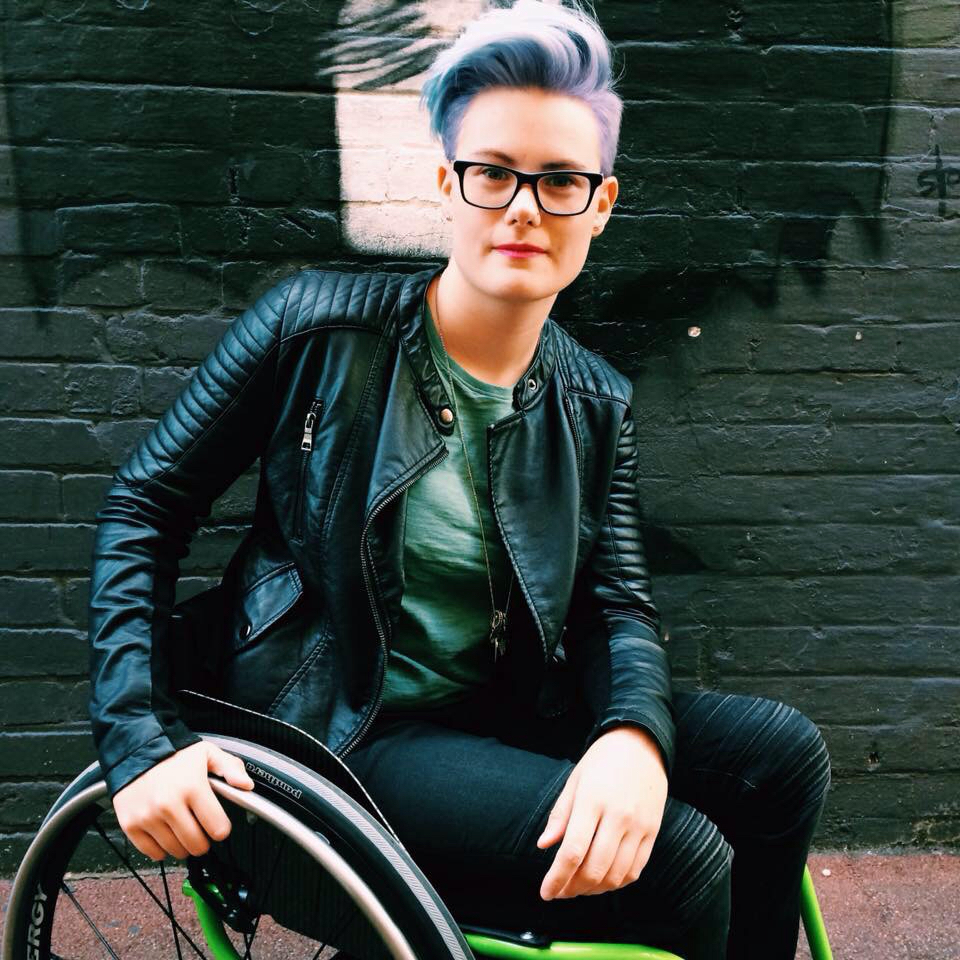
Sixth picture: Robyn Lambird sits in a wheelchair. She wears a black leather jacket, green top and black jeans. Her short hair is grey, pink and purple. She also has black glasses.

Did you like this post? Did it help you or make you think? Please consider buying me a drink!


19 August 2016

Language really does matter when reporting about people living with Ichthyosis. Harper's real story.


This article from Stock News USA came up in my google alerts yesterday morning. You can read the full text here.


"Suffering from horrible harlequin Ichthyosis."

"When she was born, she looked like an alien. It was very traumatic"

"Her bizarre condition."

Those three excerpts is all I took from the article, and I am someone with Ichthyosis.

The language used in this article about a beautiful baby with Harlequin Ichthyosis is so othering, pitying, sensationalised and disempowering it's no wonder some people with the condition question their self worth, and people without the condition are shocked by it.

I was so saddened at this language to describe one of my people that I didn't take away that she is loved, that she is oh-so-cute and that she will most likely have a good life with the right medical care and emotional support.

What are readers who *aren't* affected by Ichthyosis getting from the story?

This language gives readers permission to be shocked by Ichthyosis. It perpetuates the idea that we are objects to be gazed at, that the condition is shocking and

Awareness raising through tabloid media. Stripping dignity from people with Ichthyosis every day.

I asked Harper's mum Angie and grandmother Charlotte what they thought of the news story, and what they'd like the world to know about Harper, given the reporter missed so many details about Harper's personality and beauty.

Harper who has harlequin Ichthyosis and her grandmother

Charlotte said:

"I thought the article, except for a few mistakes, was pretty true on. I wish they had elaborated more on what is Ichthyosis, what causes it and that there is NOT a cure. I want people to understand that this condition is not "contagious", that these children (and adults) can have full lives. They are not a "freak" show, they are humans with real feelings; real challenges; real needs, just like everyone else! I realize that Harper will look "different" but that "different" makes her UNIQUE. She is a beautiful, loving child who will grow up surrounded by love. She will go to school and learn just like every other child. I think that but getting the correct information out, people LEARN about the condition and the challenges. I know, for my own self, I have been forever changed because of Harper. This change is a GOOD thing! People are curious when someone looks different and that is why educating people is so darn important!"

Charlotte continued:

"I think Harper is simply adorable and when she smiles at you, it warms your heart! I walked in the house the other day to pick up the two older children to take them to the movies, and Harper was sitting in her highchair munching out on banana. She saw me, smiled and then growled at me. I growled back and she got this smile on her face and giggled. It was so cute! She just melts me!"

Harper and her mother Angie

Angie, pictured with Harper above, told me:

"Harper loves eating, her new favorite are bananas that she feeds to herself. She loves when you sing & dance with her. She is the biggest Mama's girl ever. She will be dead asleep and hear my voice and wake up and start kicking & squealing like crazy. I ❤️ it!! If she had it her way, I would just carry her all day. She's trying to talk and ends up growling. Lol. She loves playing with her sister, Sam who is 17 & brother Jaxon who is 6. She loves cuddling with her Daddy at nighttime. Harper also just learned to shake her head no, it's so cute. She brings so much joy to our family and we are so blessed by her beautiful soul."

There's a gofundme to raise money to buy Harper a Microsilk tub. Click here to donate or share.

I was disappointed to read yet another sensationalist article about a child with Ichthyosis. But I'm very glad to get to know more about little Harper through those who love her. I really do wish the media would focus on showing people with rare medical conditions in a more positive, holistic and less pitying light. We are not here for clickbait, exploitation and sensation.

Courtney Westlake wrote a brilliant piece about the gawkers that Brenna encounters this week, and I think her response to "Look at her" applies to this article about Harper too.

Just look at how beautiful she is and what a wonderful life she has ahead of her. And look at how those who love her have written about her. There's optimism and appreciation and a real sense that she's a whole person, not "horrible Harlequin Ichthyosis". Her mum and grandmother's words will make a stranger more 'comfortable' about this rare, often confronting condition than the tabloid article I've pictured above ever will.

Language really does matter when reporting about people living with Ichthyosis.

Here are some things to consider if the media asks for your story about living with Ichthyosis.

Here is People with Disability Australia's guide to reporting on disability.


09 May 2016

When the media directs you not to google Ichthyosis - and how I'm changing that.

Content warning: this post contains screen shots featuring hate speech about Ichthyosis, and examples of ableist media representation of the condition.

Sometimes I torture myself by searching for Ichthyosis on Twitter. I want to know what people are saying about the skin condition that I have. I also don’t want to know.

The Ichthyosis Twitter stream goes like this: a few tweets from Ichthyosis support charities, some people say it’s an interesting condition (like we’re here for other’s entertainment!) and link to medical journals, there are usually tabloid news stories about people with the condition, and there are a few bloggers like me adding to the conversation.

But the majority of tweets about Ichthyosis make me despair. Lots of people tweet pictures of babies with the condition, reacting like the photos are a horror film. Many discourage the searching of Ichthyosis - especially Harlequin Ichthyosis.


Last month I did a quick Twitter search and came across a tweet responding to an article The Independent newspaper created.

I scrolled up to The Independent's tweet. They’d linked to their newspaper article titled ‘9 things you should never ever search on Google according to Reddit’. (Well, referring to Reddit as a reliable source says it all, really. You know my thoughts on Reddit. Don't even search for Ichthyosis on Reddit if you've got an ounce of empathy and decency.)

The things the article suggested you don't google included: Google (duh), your medical symptoms, your favourite food (spoiler: you'll get hungry. Big deal.) and your email address. Also on the list - Harlequin Ichthyosis.

"8. Harlequin ichthyosis

It's a severe genetic disease in which, at birth, a child's skin is encased in thick white plates of skin, separated by deep cracks.

This has many complications - because there are cracks in the skin the newborns are more susceptible to infection and constant care is required to protect and moisturise the skin.

The disease used to be considered fatal, but in 2011 theArchives of Dermatology concluded:

Harlequin ichthyosis should be regarded as a severe chronic disease that is not invariably fatal. With improved neonatal care and probably the early introduction of oral retinoids, the number of survivors is increasing."

While the content is factual, isn't derogatory and doesn't even suggest the appearance of Ichthyosis is grotesque, that it's included in this list says it all.

While someone told me The Independent is not a major paper, it describes itself as "Independent, international and intelligent news coverage, from breaking stories to agenda-setting campaigns and comment.". A quick scroll through shows me it’s no Daily Mail. There is the occasional click bait story, but its front page featured stories on UK and international politics, poor work conditions, terrorism, culture and lifestyle. It seems to have some brain.

Its online readership isn't huge, but it's in the thousands per month (about the same as my blog actually!).

This article was shared on Facebook 322 times, and received over 900 likes, and 16 retweets and 12 favourites on Twitter. In the scheme of things, those numbers aren't huge. But the media has an influence, and hundreds of people have read the article.

The Independent also has a code of conduct - this part is most relevant:

"Offensiveness

We do not set out to offend the general reader or viewer and you should always consider how people will respond to our material. That is not to say that we should necessarily shy away from publication simply for fear that it might provoke a negative reaction in some quarters. Insofar as broadcast material is concerned, the Ofcom Code makes clear that: "generally accepted standards must be applied to the contents of TV…services so as to provide protection for members of the public from…harmful or offensive material." It goes on: "Broadcasters must ensure that material which may cause offence is justified by context."

Perhaps it's a personal bias, but I strongly feel this article breached that code of conduct.

When the media creates fear around something – like we’ve seen with of the media’s hype around Islam, society doesn't actually stop to get to know these people who are marginalised and vilified.

The Independent has created fear around a medical condition, a visibly different appearance. This is bullying. Fear mongering. Hate speech. This is where it starts - the mainstream media, and of course, social media.

People’s impressions of disability come from the media – dangerous, tragedy, victims, pitiful, heroes, inspiration porn, overcoming. Sometimes I think the media representation of disability impacts society more than meeting actually disabled people in real life. They're seen shows like Embarrassing Bodies and Body Bizarre - which create awareness, but in a voyeuristic, sensationalist way - and think they've been fully educated. Next!

And this is why the disability community is constantly calling for better media representation of disability. Alice Wong writes:

"When you have non-disabled people pitching, writing and editing stories about disabled, you’re missing the lived experience that’s intimately tied to accurate depictions of disability. And it’s more than a matter of hiring more disabled people in media–there’s also a need for a culture shift to examine how ableism is entrenched in the media.

Poor media representation is why people are scared by visible difference and disability - because we are presented as grotesque. This is why people feel shameful about their appearance. This is why there’s such a stigma around looking different and having a disability. No one wants to own it, because we’re warned against googling it.

I wrote about someone being scared by my face last week. Articles like The Independent's exacerbate that fear. People are discouraged from googling Ichthyosis, so it must be grotesque, right.

A couple of weeks ago, I got thinking about why I post photos of myself and share my story. The fundamental reason hasn’t really changed since I first wrote about this. Control. Control of how my story is portrayed, control of how Ichthyosis is portrayed.

I am an online writer, focusing on Ichthyosis and what it’s like to look different so I can contribute to changing the media landscape around Ichthyosis and other visible differences. I hope to show the world that people with Ichthyosis like food, fashion, can write and think critically, have meaningful and loving relationships, endure ableism and discrimination. There are many, many others doing this through blogging and socials media too – Courtney and Brenna, DeDe and Evan, Mui, Fiqasani, Maria, Hunter, Brianna, Steph, Lucy, Gina, and many many more.

When people search for Ichthyosis online, they see the condition as medicalised, the portrayal of Ichthyosis as a horror story. They don't see our full lives, our smiles and the way we are affected by ableism and medical challenges. But we collectively have the power to change that.

Everytime I post a photo of me, or write a blog, it has the potential to be misused (it's happened before). But this content also has the opportunity to change the portrayal, contributing to the library of sensitive, non sensationalised, realistic stories about Ichthyosis.

I hashtag Ichthyosis on Instagram so people can see me leading a full, happy, loved life. They see me as a bride, as a fashionista, gazing at my husband, seeing a band, eating at a restaurant, travelling. I hope they see beauty, energy and laughter. I talk about Ichthyosis on Twitter and Facebook, because it's a part of my life, a part of my identity. And I blog about Ichthyosis so that when people Google the condition - out of fear, to ridicule, to seek information, because of genuine curiosity - they won't be shocked.

When I saw that article from The Independent, I was shocked and saddened. It's a reminder that the fight never ends. As Edward Kennedy said, "There’s work to be done. The work goes on, the cause endures, the hope still lives and the dreams shall never die."

But writing this, and thinking of all the positive content created by people affected by Ichthyosis, I realise we really can help outweigh this negative portrayal of our conditions. Disability and facial difference is too often used as a target in the mainstream and social media. It's time consumers started paying more attention to the actually disabled instead of taking cues on how to react to our appearances from those who are just out to ridicule us.

I - a person with actual ichthyosis - direct you not to listen to the media. Google ichthyosis. You'll find some amazing, beautiful, smart, articulate and strong people.


16 April 2016

The time I chatted on The Aussie Bloggers Podcast and with Clare Bowditch.

The first week of my holiday was really busy! Wedding prep took priority of course, but I had a couple of media commitments too.

The first was a chat with Amanda and Tan from the Aussie Bloggers Podcast. We chatted by Skype and while there were a lot of laughs, I covered some deep stuff. Something I've not gone into depth on this blog was an awful experience I had last year after I wrote an article and published a blog post about parents oversharing about their child's disability online. The piece was polarising, which I expected, but I didn't expect the nasty bullying I received from a few bloggers I know personally. I wrote about broad issues and these we're personal, immature and threatening attacks.

I chatted to Amanda and Tan about it on the podcast - mentioning the silent bullying, how it shattered my confidence and how scared I was to go to the Problogger conference shortly after that piece came out. Blogging isn't always roses. Fortunately, the friends and strangers who supported me far outweighed the bullying. I received a lovely message about that article from a stranger last week actually, which makes it all worth it.

Amanda and Tan have created a lovely page dedicated to my pocast.

You can listen to the podcast on iTunes here.

Amanda and Tan have interviewed lots off other bloggers - do subscribe!

The second, a couple of days later, was a radio interview with Clare Bowditch on ABC Radio. I've been a fan of Clare's music for years, and after hearing her talk about her Big Hearted Business project and her advice on a creative career at Problogger 2013 (I wrote about that here), I saw what a warm, funny, passionate person she is. I was excited to be invited to chat with her on her new radio show (1.00 - 3.00 pm weekdays on ABC 774 Melbourne).

When I arrived, she called me Carls, gave me a hug and asked me what song I'd like her to play at the top of the hour (Bob Evans of course!). And then we had a lovely chat about appearance activism, inspiration porn and the wedding.

There were a few listeners who called and texted in, and Clare was genuinely interested in their stories. She really does make everyone feel welcome. What a treat to be interviewed by this lovely, talented, friendly woman!

You can listen to Clare and I here.

Carly Findlay and Clare Bowditch

Also, I can't recall if I posted this one, but I chatted on ABC Afternoons earlier in the year - here's that recording.

I hope you're having a lovely weekend!


08 October 2015

The public gaze - on being invited to be a subject of the Body Bizarre documentary.

Last month I wrote some advice you might like to consider when approached by the media to tell your story about your rare medical condition/disability/facial difference. The blog post was received really well - with friends noting down the questions for the next time they're asked to appear in the media. You can read that here.

For my own amusement, I put my own advice to the test when I received yet another invite to take part in a documentary about rare medical conditions. I think the producer just expected me to say yes, of course I'll be exploited by a voyeuristic program.

I emailed the producer the questions I stated in my post. I was frank with her - explaining my concerns about how they portray disability. I wonder if she's ever had such rigorous, assertive questioning before?

The producer surprisingly emailed me back, addressing my concerns. She did so empathetically and comprehensively, I admit. She reassured me they will not have exclusive rights to my story, and they will not use the disempowering language like "suffers from".

But the show fails. Epically.

It's called Body Bizarre. The sensational title is a drawcard. The producer said "I must stress that the name does not reflect the sensitive nature of the programme. The title is more of an "attention grabber" and not indicative of the human nature of the stories we cover." The fact different appearances and sensational titles attracts viewers is mawkish. The title is abhorrent. It's not sensitive nor empathetic. Just like I don't want to be labeled embarrassing, I don't want my condition to be labeled as bizarre either.

The production company will offer me "a $200 inconvenience fee". What. A. Joke. I know my worth. And I suspect the company is making a hell of a lot more money than to scrimp on compensating their subjects.

The producer provided a link to one of the episodes, detailing a friend with harlequin Ichthyosis. The narrator uses phrases including "suffers from" and "normal skin" - very othering, pitying language. In the first minute and a half, the camera zoomed in on my friend washing her face, creaming her body and cutting thick skin off her feet . And I ask myself, why is it ok to broadcast these private bathroom moments in the name of medical information? I didn't watch any further.

I know some readers will think my stance on this exploitative media is an absolute contradiction. People have told me so. Pfft. I blog, regularly write for the media and quite enjoy having an audience. I am comfortable sharing my image across social media. I put myself out there. So I get it. Why wouldn't I want extra media attention? Why would I criticise this method of "awareness raising" when I do it via the media too? Aren't I hypocritical?!

Well. I like to be able to tell my own story in my own words. I like to portray the condition realistically and positively (even the difficult things) - with positive language. I don't want to be in the public gaze for voyeuristic entertainment. I don't want to be someone else's money maker (for a $200 inconvenience fee). I don't want to be the subject of pity or inspiration, and I certainly don't want to endure the ridicule from viewers.

I want to tell my story on my terms, changing the disability media landscape. And I encourage others to do the same.

The public gaze has moved from the human spectacle of The Lifestyle Channel to our social media feeds now - with smartphones allowing for social media paparazzi. This new wave of paparazzi are creating inspiration porn for likes and shares. Karin Hitselberger who blogs at Claiming Crip recently wrote:

"Disabled people are not tourist attractions, science exhibits or zoo animals. You cannot photograph us or stare at us because we exist in public spaces...

I thought of the difficult situation of being disabled in public in the modern world.

People have always stared, but now staring has gone viral."

And it's programs like Body Bizarre that encourage this social media paparazzi. People think it's ok to stare and capture their curiosity through their smart phones. The focus on people with disabilities doing every day things, existing to inspire and remind viewers their lives aren't so bad after all perpetuates the need to photograph someone with a disability doing something ordinary in public, upload and inspire.

During our Quippings - Disability Unleashed shows at the Melbourne Fringe Festival, we formed a conga line - inviting stares and staring back. While our audience is progressive and assumably not the type to stare at people with disabilities, it felt good to pretend I was turning around the staring I receive regularly. During the last show, when I felt my most relaxed and uninhibited, I pointed at someone and let out a cackling laugh. It was for all those who've done it to me. It felt so good.

Kath Duncan, co-producer of this year’s Quippings Fringe shows believes the uniqueness and power of our performance is because "we, the diverse and disabled performers, are in control of the space." Kath said:

"Quippings was born because the opportunities for Deaf and disabled people to present our stories our way were limited. We formed to produce, write, direct and present edgy and intimate stories, working our own bodies as creative disability pride in action. Defying how others see us. We are over-examined and over-written with weird or negative assumptions pretty much every day so this year we fully embraced that tension of seeing and being seen by circling the audience every night as performers and disabled people, staring at them and inviting them to look at us. It was very powerful and a real ice-breaker for us and for the audience, examining them like we so often experience, while showing them it was ok to look at us just as we are, without mediation by some non-disabled commentator or editor."

The Conversation wrote of disabled performers at the 2015 Melbourne Fringe Festival - asking "where did all these artists with disability come from, and why are they suddenly visible?" The article describes the move from performances where "the disabled are the passive subjects of the "able" gaze, within forms of performance designed by and for "able" artists" to "disempowered or marginalised communities... progressively claim[ing] the right not just to be visible in the cultural landscape, but to tell their own stories."

Body Bizarre has created passive subjects as objects for public scrutiny, whose stories are narrated to evoke pity - a concept The Conversarion described. But through people telling our own stories through blogging and performances and YouTube channels and standup (sitdown?) comedy and podcasts and mainstream media is taking back that power - inviting the public gaze in a much less gawkish way.

When we invite the public gaze in on our own terms, it's very empowering. We are choosing how we want to be portrayed - taking on the tabloid and social media paparazzi predators.

I'm still not here for your entertainment (or infotainment) unless I invite it.


14 September 2015

What to consider when the media asks you for your story (about life with ichthyosis or facial differences or disabilities).

I receive emails from journalists and media makers asking me to tell my story about life with ichthyosis about once a month now. Most of these are for tabloid media, but some are for public media and well respected publications and programs. I've said yes to a few and no to more. My friends with ichthyosis and other facial differences and disabilities also receive media requests - some have taken opportunities up and that's great for them!

I've sold my story to two tabloid publications. I regret one of them because I had no control. It was sensationalist, they spelt my dad's name wrong and they hounded me doe the story. The other was far more respectful - letting me write a follow up article in third person, even. And I was paid well. I've been on radio many times, a couple of commercial TV programs and on many websites - and for the most part, I've had positive experiences.

I also write for a number of mainstream media publications - some of which could be classed as tabloid. But writing myself is different to being written about.

I blog to ensure I have control over the way my story is portrayed and how Ichthyosis is represented. This has led to me writing for mainstream media publications and speaking on radio and TV and some podcasts.

It's also led to me developing thick skin. Had it not been for my already developed online profile, I'd never give my story to anyone if I didn't have this resilience. I also have the benefit of a media degree and keen interest and a little knowledge of how the media works to help me make a decision. I have media contacts and prefer to pitch my story myself. As I've written previously, I prefer to write for publications that I read and respect, but sometimes I'll tell my story to those I don't, to help influence a new audience.

Tabloid journalists can be pushy. They can lurk in support groups, reading private discussions and then they pounce - assuring you your story is in good hands and will help others. They can prey on people at their most vulnerable, drawing out private details and photos through sneakily winning trust. (I'm cynical!)

Rare medical conditions such as Ichthyosis are not always portrayed in a positive way. Sensationalist, voyeuristic and othering language is used. Cameras zoom in on symptoms, dehumanising the subjects of the story,

Subjects of articles and programs are often portrayed as a victim or hero. Commenters can be brutal. (And even when you write your own story, there's a risk of the sub-editors sensationalising a headline.)

I shared Sarah's story in February. She wrote it for me. Sarah lost her eye as a result of domestic violence. I took great care in publishing it, Waiting six months after receiving it - she was safe from her ex husband then. I provided a trigger warning and links to support services. And an international tabloid wanted that story too. They asked me for her details and when I didn't pass them on, they tracked her down on Facebook. They pushed her when she was at her most vulnerable, convincing her to send graphic photos that she can no longer bear to look at. They didn't put a content warning nor link to support groups. She didn't know or read the publication when she was approached, and tells me she'd never read it now. She regrets it and wishes she'd listened to my advice.

Two friends - one with a facial difference and one with Ichthyosis - told me they sold their stories to media and regret it.

Jackie said:

"I [told my story to the media] and regretted it. Terrible article, made up scenarios and when I explicitly told them I didn't want it published after having a read through they said it was tough and was too late to pull it. I was distraught and there was nothing I could do. I was annoyed at myself too as I'm not naive when it comes to media, but at the same time wanted to set a positive example... can't win!"

Rebekah told me:

"I sold my story to a magazine here in NZ. I wish I had the opportunity to proof read it first ... they didn't really portray me the way I wanted them to. [I was portrayed] like I wanted everyone to feel sorry for me. I wanted to be portrayed more as someone who is out in society making a worthwhile contribution and making most of every opportunity".

But telling your story to the media might be a really positive, empowering thing too! A friend with quadriplegia told me that when a newspaper covered her story, she felt listened to because the journalists were genuinely interested. Your story might help many others, and it can open up some amazing opportunities like further media appearances and getting in touch with others who have your condition. A close friend got a cookbook deal after appearing on a tabloid news program. And the media outlet might be really awesome - I loved working on No Limits - as they allowed people with disabilities to be in control of our stories.

Last week a good friend contacted me for some media advice. A production company seems to be scouring the whole internet for people with Ichthyosis, wanting to make a film about patients with rare conditions meeting for the first time. I say scouring because two other friends have asked me if I know anything about this company. I don't know much, but I've also received three emails from them, asking for my involvement. I've turned them down. It seems they're preying on people with the condition.

I gave my friend the following advice:

It pays to do some research before saying yes. Here are some questions to ask yourself and the media representative.

  • Would you or do you already watch the show or read the publication?
  • What else has the film company or publication made?
  • How sensationalist is the publication or the program?
  • Will the title of the show be derogatory? (Think Embarrassing Bodies or The Biggest Loser.) What about the title of the article? (The Pick Me Up magazine article screamed I ALWAYS LOOK SUBNURNT!)
  • What is the reach? Is it going to mainstream TV? A large publication? Is it tiny?
  • Do you get paid? (You should!) Is it enough compensation to cover the instance that you'll be misrepresented?
  • Can you tell your story to other publications or programs, or are you limited by an exclusivity clause?
  • How much control will you have ever the story and filming and editing? Will they let you see the final draft and allow you to suggest edits?
  • What language do they use? Is it disability positive? Do they use person-first language ("person with disability")? Do they use language that portrays disabilities as tragedies ("suffers from", "wheelchair bound")?
  • Will the story be pitying? Will you be the hero of the story? (neither are good).
  • Will it be inspiration porn?
  • Can you handle the attention of being in the media - good and bad? Is there someone to support you?
  • How will this benefit you? How will this benefit others?
  • Will they represent you well - alter or edit quotes or even photoshop your image?
  • Have you got permission to tell your child's story, if that's what the media has asked for? What will be the long term ramifications?
  • Could you tell your story somewhere else - to a more reputable publication?
  • Could you tell your story yourself? (Maybe start a blog or start a YouTube channel!)

It's ok to say no, and it's ok to say yes, but only if you're 100 percent comfortable with it. I'd be very careful about how Ichthyosis is portrayed. It can be so exciting to be approached by the media, but regretful if it goes wrong.

Further reading

A Guide to Reporting on Disability - People with Disability Australia

Face equality in the media - Changing Faces

Advice on disability language - Arts Access Australia

Have you told your story to the media? Was it positive or negative? What advice would you give?

Did you like this post? Please consider buying me a drink!


30 January 2015

Disability featured on My Kitchen Rules

The new season of My Kitchen Rules sees a contestant with a disability compete. Queensland sisters Sheri and Emilie will cook up a storm in season four of My Kitchen Rules - plating up for judges Pete Evans and Manu Feildel and their fellow contestants. 


Emilie has been deaf since birth. She says she has no hearing in her left ear and wears a hearing aid in her right. She’s open about her deafness, joking that people talk to her as though she can’t hear at all, dumbing down their language and tone of voice.

Seeing the funny side of her disability seems like a leveller for the pair. Sheri jokes that Emilie will think she’s whispering but she’ll really be yelling about how bad the food tastes!

Sheri and Emilie are fun, vibrant and beautiful women, and I will be cheering them on!


There has been a number of Australian reality TV contestants with disabilities on our screens over the years - John Hughes from season three of MasterChef has cerebral palsy, Gemma from season 11 of Big Brother has Marfan Syndrome (a condition that causes her to be very tall), Rachel Leahcar from season one of The Voice is blind, and Katrina from The Block in 2011 has Crohn’s disease (a condition affecting her bowel).

It’s so important that people with disabilities are included in the mainstream media - especially as reality TV contestants. Inclusion in media normalises people with disability. It takes them to viewers’ screens and allows viewers to see a full, fun and voluntarily challenging life lived, with varying interests and skills.

It breaks down the stigma of disability - allowing viewers to get to know the person, and perhaps making viewers reconsider judging others with disabilities.

One in five Australians have a disability. We need this to be represented on our TV.

Craig Wallace, president of People with Disability Australia says Australian TV lags behind with including disability on TV. "People with a visible disability are often invisible on Prime time tellie in Australia. This is in contrast to the US and UK where we have seen major characters with disability break out in shows like Breaking Bad or Eastenders as well as reality TV”, Craig says.

"Reality TV has really become a staple of Australian prime time TV so its great that Sheri and Emilie will be part of My Kitchen Rules this year.

"I love how the promotion so far has been around them cooking up a storm rather than just about Emilie being deaf. I'm looking forward to seeing them wow the judges”, Craig says.

My Kitchen Rules starts on Channel 7 on 2 February.

I originally wrote this post for Beamly, it's been republished here with permission from the editor. 

21 January 2015

Disability media and Attitude TV - "Changing attitudes will change lives".

AttitudeTV has recently come across the ditch, and has been airing on ABC TV in Australia each Saturday at 6.30 and on iView. It is a New Zealand made show focused on people with disabilities. It also holds the Attitude Awards - each International Day of People with a Disability.

In Australia, The Attitude Foundation - chaired by former Disability Discrimination Commissioner Graeme Innes - wants to create an Australian equivalent of the show - my thoughts on that later. 

I have watched episode one and three of Attitude, and will catch up on the others on iView soon. Graeme Innes wrote about episode one on his blog.


Episode three of Attitude featured a story about Amanda Lowry, who fell off her surfboard in an accident, and was paralysed from the neck down. The program began with Amanda talking about how active she is, and then showing her in the Auckland spinal unit - a week after her accident. Her whole life has changed. She said “everything has been re-written” - explaining how her arms and legs don’t work and she needs help going to the toilet. She was on her way to doing her PhD - and her partner was going to be the primary carer of their children while Amanda went to work. But life changed suddenly - for the whole family. 

The program showed Amanda in rehabilitation, and the way her partner had to make adjustments to their living arrangements to support Amanda’s acquired disability. They were going to live in temporary accommodation after the rehabilitation unit - to allow for the physical support Amanda needs for her disability. Amanda was also very apprehensive about seeing her children after leaving rehab, because they had not seen her since before the accident, when she had full body movement. She spoke of her three year old daughter Lola being upset about her newly acquired disability, describing her mum as “broken” - hoping that if she takes care of her Mum, Amanda will be fixed. 

In the hospital, Amanda said she will do everything she can to return to the life she had before the accident. 

At the end of the program Amanda said she will never accept her disability. I hope that one day she does accept it, that she finds connection in community and is proud of her identity - disability and all.  

I watched the follow up story which showed Amanda's grief - she misses her 'old' life so much.

One very positive point was that the program acknowledged Amanda is in a same-sex relationship - which shows broad diversity. 

Watch Amanda’s recovery story here , and her new life story hereand follow her on Facebook.


I am committed to increasing and celebrating disability led and featured media in Australia. I believe in Attitude Australia's mantra that "changing attitudes will change lives".

We need an Australian series of Attitude. We need to see how disability can happen to us at any time. Viewers must be able to get a true perspective of how people with disabilities live - and see the hard times and the good times. 

I believe the Australian series must be disability-led, and must show the diversity of disabilities - acquired and congenital - and the reasons for this are twofold. 

I think a lack of disability diversity portrayal:  
  
1) doesn't give people permission to identify as having a disability if they don't fit in the stereotypes of disability, 

and 

2) doesn't educate the wider public about disability, so they might not see their discriminatory behaviour (as was the case with the taxi driver incident I endured). A friend of mine recently spoke about how once she was given permission from Stella Young to identify with having a disability, she sought the help she needed to get through her studies. 

While we've only seen a few episodes of New Zealand's Attitude, I hope that an Australian version will feature more stories of people feeling empowered and proud and accepting of their disabilities - showing what life is like out of rehabilitation and what success looks like. The Australian disability community has been critical of the limiting ways the show has portrayed disabilities over these few episodes. 

And an Australian Attitude must reach more than just an audience made up of the disability community. It needs a prime-time spot. Without going mainstream, it’s merely preaching to the converted.

Attitude is now in its 10th season in New Zealand - it first aired in 2005. According to the NZ government broadcast funding agency's website, Attitude TV receives over one million $NZ of funding. I implore Australian television networks and government to have the same commitment to finance and longevity that Attitude New Zealand has received. 

We need disability media now more than ever. 

You can help Change Attitudes by supporting the Start Some Good campaign. We are crowd-funding our first Australian programme, and we’ll build to an Australian series. Join us today to help change attitudes towards people with disabilities.

Follow the Attitude Foundation on Facebook and Twitter

This post was written for the Attitude Foundation - no payment was received. Opinions are my own. 

LinkWithin

Related Posts with Thumbnails