Showing posts with label social media. Show all posts

29 August 2016

Overwhelm – the perils of living what I am writing about.

Carly Findlay looking into the distance. Wearing a hat, blue dress and floral top.

There's a funny irony in writing this. I started writing this in mid July. I called for quotes, did some research and expected to knock this out in an evening – writing from personal experience is always quick. Then I got so overwhelmed that I couldn't finish it.

I could feel the overwhelm creep up a few weeks before I became sick enough to go to hospital. My skin was constantly sore, and my head and face pounded with tooth pain. I’ve been overwhelmed because I'm an online writer, and also by seeing the abuse that’s happened to other online writers lately. I became agitated at what I perceived as snippy comments, and at people who invalidated my experiences of microaggressions (more on that in a future blog post). A few months earlier, a former friend had a public dig at me, saying I was too privileged to be severely impacted by my disability, and so I've carried the weight of that guilt around like a falsified diagnosis.

I felt like I was drowning in issues - some that people expected me to fix. Every time I logged onto social media, there would be another disability issue to address, to grieve over. Of course, I don't have to take those issues on, but there’s a certain responsibility as a disabled activist with a media platform to do so. I couldn't breathe.

And then, I did get sicker - a lot to do with the traumatic extraction of my wisdom teeth, and a little to do with the overwhelm I was feeling.

I voiced that I was feeling overwhelmed on social media. It was met with an outpouring of support (thank you). And then a loyal commenter reminded me to be grateful I have a platform to express my opinion (I am so grateful). She went on to remind me that being a change-maker is "not like we are in the trenches, or nurses in an emerg[ency] ward or nursing home, or in court fighting. Let's not take ourselves too seriously people."

Thud. I think it hit harder because I was already feeling overwhelmed.

I have so much perspective. I acknowledge my privilege and recognise that I earn a modest side-gig wage, and am working from a safe place. I'm hardly the light-hearted diary-style blogger I was five or six years ago. Of course, some of my posts are frivolous - I love fashion and I'm such a fangirl. And I must break up the serious with the light-hearted, so I try not to overwhelm readers with only disability and appearance diversity related issues.

But I take my work very seriously. I share my experiences so others don't feel so alone, and for my own benefit of course - so I don't feel so alone either. I want to ensure my opinions are informed, so I research a lot before writing. I aim to share a wide range of perspectives about disability and appearance diversity on social media - so readers aren't just hearing my voice. (Hence the amount of quotes in this post.) I also feel I have a duty of care to those I'm writing and speaking to - because some people are so desperate for medical and emotional advice, and hope.

I also live what I'm writing about. I have Ichthyosis. I have a disability. I live the discrimination and the ableism and the pain. I'm in touch with hundreds with ichthyosis and reading their stories can take its toll too.

It's not like I'm looking at or covering these issues from the outside.

I find it a little worrying that change makers can't put their hands up to say they're feeling overwhelmed. Self care is so important

When I see videos saying Mui and Hunter have a terrifying condition, when I see Jack and Evan's photos misused on Facebook, when I see hate speech below a video about little Evan, and an airline discriminating against a little girl with Ichthyosis, it hurts. When I see pictures of kids in pain in Facebook groups (well intentioned, of course), or their photos being stolen, I get so angry. I cry. I fire off emails to social media heads. I gently educate parents about the impacts of oversharing about their kids' disabilities (which is often met with anger, but sometimes understanding). I despise the way most media companies represent Ichthyosis, and so I rant. I check in with people to see how they're doing after they've faced discrimination. I recommend they see dermatologists and counsellors. I meet with families and individuals (this is a lovely thing!). I worry, keeping strangers' secrets about depression, guilt and grief, being too scared to face the world, even suicidal thoughts. And sometimes I even wish for a cure for this goddamn condition that's so misunderstood. And there's no doubt this impacts on my own health. These are my people. It hurts.

As well as stumbling across stories and photos in my social media feed, I receive calls for help by email and private message. Recently, I’ve been asked to provide advice about constipation that may be related to Ichthyosis, been asked to diagnose based on pictures of sore skin, and asked for suggestions about navigating love when your partner's family sees Ichthyosis as a curse.

I’ve received several requests to tell my story to tabloid media. And I was approached by several aid workers plus a journalist from our national broadcaster and an aid worker in Kenya, trying to reduce the stigma around Ichthyosis.

I endured some was some stalkerish, aggressive behaviour which was very scary.

I’ve also written a few articles on difficult topics - and was torn to shreds by a few people for doing so. While I don't expect agreement on everything I write about, the tone of how people disagree can sting, you know?

I'm not listing these things for you to say "what a hard life". But I want you to know the reality of what I encounter, on top of living with my condition - which has been incredibly challenging. I am living the things I write about.

Prior to my recent hospital stay, I took myself to the hospital outpatients to get some stronger antibiotics and painkillers. One of the senior dermatologists told the resident about my blog, and how it's such a big resource for dermatologists, patients and families. I told the dermatologists about some of the reader questions I've been answering lately, and they reminded me what a big thing it is, and that these questions make me reflect on my own experiences. She was so right. Perhaps what I'm experiencing is vicarious trauma.

Tara Moss wrote about vicarious trauma in her book Speaking Out. She outlined her experience of other people telling their stories once she had told hers in her part biography The Fictional Woman.

"It was a beautiful experience, if emotionally draining... I had not been fully prepared for the outpouring of support, emotion and personal stories from ordinary people."

She went on:

"I could not have imagined that from that moment on, there would be men and women telling me about the child abuse they had endured...there would be readers telling me about the relationships they had fled; and there would be women and girls telling me about the abuse they were currently experiencing in their own homes, sometimes in book signing line-ups, or on the street."

Tara wrote that she "couldn't switch off when I heard these stories as a psychologist or other professional learns to do. I did not have 'office hours' as it were. My exposure to this trauma was random and unexpected.

She also mentioned the vicarious trauma experienced as UNICEF ambassador in Syria - seeing children suffering (even being killed) in refugee camps.

"It's the little details that make you crack. In this instance, it was the reality that over a dozen small children had been electrocuted to death while walking or playing in a particular area of a camp with bad wiring."

Carly Findlay and Tara Moss

I acknowledge Tara's experiences of volunteering in Syria and my experience writing, speaking and living Ichthyosis are different. I'm not in a war zone. I haven't experienced sexual assault. But I live what I’m writing about. And people tell me their stories because I tell mine. That's such a privilege. But it comes with a cost.

The support for vicarious trauma in a professional setting is much better than that for a blogger.

I know others who are affected by being on, by living what they write about - they're from all types of diverse backgrounds. I know women who talk about domestic violence and receive rape threats. A friend survived a terrorist attack and is regularly vilified for speaking out. Another friend talks about racism, which is met with racism. The amazing young Greens member Jason Ball, who champions LGBTIQ rights was recently called a homophobic slur via the defacement of a poster during his election campaign, and responded so diplomatically. These people are I n the thick of it, too.

I asked my friend Dr Susan Carland, Muslim academic and writer, what it feels like to be in the thick of the issues she writes and speaks about. Dr Carland is on the receiving end of Islamaphobic abuse regularly – she decided to donate $1 to UNCEF for every hateful tweet she receives.

"It's hard", Dr Carland says.

"There are certainly times when I feel despondent, and things feel futile, or overwhelming, I think especially at the moment when it's not just anonymous trolls, but elected leaders and well-known media people contributing to the vitriol. I keep speaking about it because I think it needs to be discussed and also because I feel that often people who aren't Muslim are unaware of what is happening. And if people don't know what is happening, it's hard to convince them of the seriousness of the situation."

She told me what she does for self care.

"Having a break from social media, and the media in general helps when everything feels grim. Getting lots of sleep and exercise is another useful self-care tip, and spending time with the good, uplifting people in my life all helps and provides important perspective."

Carly Findlay and Dr Susan Carland

Another friend, Tarang Chawla, Ambassador for Our Watch, White Ribbon and safe steps Family Violence Response Centre, has been prominent in the media since asking a question on Q&A in July. I wondered how he’s coping, because he’s living with a sombre reminder of what he’s speaking out about every day.

Tarang’s sister Niki was murdered by her partner in her sleep on 9 January 2015. She was 23. Since her murder, Tarang has been doing advocacy and campaign work around the prevention of family violence. He tells me it’s "mostly it's an expectation of myself, than from others. I think that because it's so close to home, I find ways to do work that I think is important."

Tarang told me it can be difficult to be vocal, but his strength comes from the memory of his sister.

"Sometimes it can be really hard, but I think about my sister in life, her positive energy and that gives me strength. Behind every statistic about men's violence against women is a human story. Through my advocacy work, I've met so many brave women and children and they're inspiring people. It's the human element that always drives me. I have a platform and a voice and so I use it as much as I can to support bringing about the changes that will prevent violence."

He said he’s not so great at following advice about self care – he thinks he’s better at giving advice to others.

"Having someone to talk to is probably the most important. And becoming OK to talk about it, whatever that may be."

There's that modern-day adage of "you put yourself out there online, you should expect abuse back". I don't buy that. And the overwhelm I am writing about is not abuse. It's the expectation to be ‘on’, and the responsibility to serve the community well. I've also got a mind that doesn't switch off, with about 15 pieces of writing in draft, all quite serious topics.

Michelle Roger who blogs at Living with Bob also knows the overwhelm associated with living what we write about. She told me:

"We live it, plus we hold all the needs of those who write to us behind the scenes, those who write saying they're going to take their life and are at their wits end, That is so taxing and you can't just clock off. Plus the whole if you dare to have an opinion you get torn to shreds."

Michelle Roger and Carly Findlay

Michelle empathised with me when I voiced my overhwlem on social media.

"You never have to apologise for saying you're overwhelmed, Carly. You're a human being and entitled to express yourself including when it gets on top of you. You don't have to burn yourself out by being on all the time. Self-care is important and it's what makes it possible to keep going. Advocacy and activism is a 24/7 job and you are often holding not only your own personal issues but also the needs of the multitude who contact you behind the scenes, many in quite dire straits. You can't just clock off at 5pm. Not to mention the people who tear you apart because the latest article you wrote isn't what they wanted to hear. You do it because you love it and can't imagine not doing it, but it takes it's toll. Take care of yourself."

She also blogged about being ‘on’ - living it - last year:

"When I became ill back in 2006 the lack of awareness about any form of Dysautonomia was a huge impediment to finding a specialist and finding a diagnosis. When I tried to explain to others what was wrong, even those who I worked with in health, I was met with a lot of blank stares. With education having been a large part of my then job description, education, awareness raising and advocacy was a logical move as I became a full time patient. I have now spent years doing just that. Not only for Dysautonomia, but invisible and chronic illness and disability in general. I enjoy it and it is a passion.

But what I did not realise was that in becoming ill I was also assigned a secondary job complete with Key Performance Indicators (KPIs) and people would happily and at times aggressively, point out when I didn't meet those KPIs. It was clear I was expected to be ON at all times. And that my workload, as decreed by others, was increasing exponentially.

The problem with being ON 24/7, and I'll admit I did internalise that philosophy and often beat myself up for not meeting expectations, is that I am also a human being. A chronically ill human being."

Michelle, Tarang, Susan and Tara are all advocates of self care. It's something I need to take more seriously, and I have been since becoming so unwell. It's also been good to reflect on the work myself and others do - truly living it - and to acknowledge that it's important and has an impact on others.

When I was at university, I did an assignment on journalism and trauma. I learnt about the Dart Centre for Journalism and Trauma – it’s "dedicated to improving media coverage of trauma, conflict and tragedy." The website has some great information on self care, which could be useful for self advocates and activists of all types.

While I’m not reporting from war zones or writing about assault or murder, telling my own story and writing about wider disability issues carries its own trauma. As long as I'm living what I write about, I will take what I do seriously. And so I must take self care as seriously as I take speaking out about the discrimination, ableism and pain of living with a disability.

Did you like this post? Did it help you or make you think? Please consider buying me a drink!


04 July 2016

Meeting Tara Moss and being empowered to tackle online abuse in real time.

This blog contains a censored naked photo and some aggressive language. I've posted the screen shots at the bottom of the blog so you can read the whole post and skip the nasty stuff.

If you need to talk to someone about online abuse, phone Lifeline on 13 11 14, Kids Helpline on 1800 55 1800 or 1800RESPECT or visit ACORN. You can also contact police on 000. Google the relevant authorities in your country,

Tara Moss and Carly Findlay


A couple of weeks ago, I saw Tara Moss in conversation with Berry Liberman, the Dumbo Feather editor. It was part of Tara's book tour for Speaking Out - her latest handbook for girls and women. I'm a contributor to the book too!

The conversation was so smart, funny and engaging. Tara is a delight - she really knows her stuff, but is humble, and she wants to give others a chance to speak out too.

Here's a summary of the discussion, taken from my live tweets during the night.

Tara said said Speaking Out was needed to get to the bottom about issues she was constantly being asked about. She said her previous book tour for The Fictional Woman became a speaking and listening tour, hearing about tough stuff from women. The attendees of the tour asked her for this book. She wanted to give a lengthier response than a 140 character tweet. She encourages readers to use Speaking Out as a handbook. She wants readers to highlight it, scribble on it, tear pages out, if we want. "Make it your own."

Tara said women receive bullying that silences them, the type that pushes them out of the game. Sexism and racism is alive and well online, becoming normalised behaviour. Women speaking out are fatigued due to online threats and bullying. "If we let bullies win, we are all in trouble".

She reminded us we have the right to report abuse and threats, and ban and block, and call police if needed. Or, "put on the red steel if that's what works for you" - on the power of lipstick.

Tara spoke about the sexism she's encountered. In 2002 had to take a polygraph test to prove she writes her own books. Apparently a model turned author is not possible? She said the sexism she's experienced is prevalent for all women, especially around career. "The question 'can you have a career and have a family?' Is not a question that's ever asked of men", she said. Interestingly, when I tweeted this, a man jumped in defensively about his role as a father, not knowing the context of my live tweeting, I guess.

She said said before blogs and social media, everything about her was written by someone else. She didn't have a voice. But now she does. Tara wants to allow space for others to speak, particularly those not represented in public life. Speaking Out was written to encourage those who weren't invited to speak. Tara said she feels like a reporter, using her profile to do what she can to give voices to individuals and causes. But she never wants to speak for someone. "it's important I don't speak for refugees, because that happens far too often."

Tara cannot be an activist on her own. It's a team effort. Agreed. I can't either. Much the feedback activists receive is often the same, common language. It's often criticism about an activist's appearance, intelligence, weight, or telling us to take a joke. Never about the issue itself. "Fun but depressing", Tara said, likening it to "anti feminist gaslighting bingo".

She regularly reaches out to those she's never met - asking if they're ok after they've written a powerful article and are receiving criticism and threats. This has been my experience - Tara has often messaged me to ask if I'm ok.

I found it interesting to hear about the boundaries she sets for herself when using social media. She never uses her electronic devices in her pyjamas, in the bathroom or in bed as these are private spaces. She doesn't want to invite unwanted guests into these parts of her house, so that's why she chooses not to use social media in these contexts.

Through sharing her story, many people offered support and shared their stories (which is a privilege), but she has also received rape threats. At this time, Berry raised the story about the woman who responded to an unsolicited dick pic by sending a dick pic. Tara said dick (penis) pics online have been normalised, and if law enforcement doesn't intervene, we are saying it's ok. (Hold that thought, and see what happened to me later in the night. Keep in mind I was only summing up Tara's talk, quoting verbatim at times.)

Berry and Tara spent some time discussing Tara's role as a UNICEF ambassador. Tara wears many hats and she takes her unpaid ambassadorial roles just as seriously as her paid roles, spending time researching and talking with relevant people. Last year, she spent time in Syria refugee camps. Around her, families - including children - lost their lives due to unsafe living conditions. She tried to keep strong in front of the children. "It feels like a gross luxury for me to be crying in front of kids". Tara said she gets disappointed with herself when she shows her vulnerability. But she keeps that short, because it's not useful. It's not surprising that with Tara's caring nature, her five year old daughter is too. When Tara's daughter sees her crying, she asks if she wants a cup of tea, and gives her a tissue. "We need more people in the world to tell people they don't need to stop crying", Tara said.

Humbly, she said she doesn't knock it out of the park every time. "No one is perfect." Tara went on to say that when a woman or member of a marginalised group "screws up", it feeds into our unconscious bias about that group.

At the end of her talk, a number of people stood up and asked Tara questions or told their story. A young woman said that she's only just starting to own her vulnerability, that people assume she's happy because she's smiling, and that she doesn't need support. She was so brave, speaking about her mental health and not being afraid to let the room see her cry. Tara replied: "you cannot tell by looking at someone how happy or healthy they are, or how much support they need."

She was asked whether Speaking Out was a book for men, too, or only for women and girls. Tara said she was told to write Speaking Out by hundreds of women. "men can still buy the book too. Kudos to men who have read it". She shared a quick story of how it took a man to put his hand up for a woman to be heard. She encouraged men to "call it". Call out sexism and being ignored & lack of diversity. "Allow the space to have the microphone handed to them."

And then a strange - but not surprising, given the talk - thing happened. I refreshed my Twitter feed after live tweeting the conversation, and up popped a dick pick. Woah. So creepy.

I quickly showed my friend Annie, and we gasped. I gingerly put my hand up and said I've just received a dick pic after live tweeting. I told Tara and Berry this was the first dick pic I've received, even before my husband.

Tara smiled, with a glint in her perfectly made-up eye. "Let's take a group selfie and send it to him." So we did. She encouraged us to make a gesture to show him what we thought of his dick pic.

Carly Findlay, Tara Moss and Dumbo Feather audience

I tweeted the picture with this caption.

Hey @BigDave0066 we all just saw your dick pic. This is what we think.

When I replied, telling him I showed his photo to others (I didn't retweet it, but showed it to Annie and Tara, and it was public, duh), he became aggressive.

"@BigDave0066:

@carlyfindlay keep my pic between us bitch, just rate"

I felt empowered to share all of his abuse. Because this is the language Tara Moss talked about. Man sends dick pic, then: "you didnt show anyone, did you bitch?"

I told him:

"Sorry, Tara Moss! Dumbo Feather and 220 women have my back."

He kept at it until I blocked and reported him. A few people said this was a bot account, and perhaps it was, just scanning Twitter for mentions of "dick pics". Whatever the case, the tweets were designed to abuse women.

This sense of entitlement and the intrusion from him was confronting. He sent me a photo of a naked man (it might not have been him), unsolicited. I never asked for it. I never suggested I wanted one. I was never provocative. I never knew he existed until his pasty white, podgy, naked body came up in my Twitter feed. Aggression followed the photo. It absolutely confirmed everything Tara spoke about.

I've been immune to this type of abuse until that night. But friends receive sexualised photos, rape threats and death threats regularly. This is not ok.

It was awful to receive this photo - this gender focused, sexualised abuse. But at that moment, being in a room of mostly women, led by an amazing feminist, I felt very safe receiving online abuse. It was a moment of solidarity. I was empowered to tackle online abuse in real time.

And I'm so glad this was the way Tara Moss and I met for the first time. What a story to tell when we catch up again. We hugged, she signed her books for me (I bought Speaking Out for my Mum) and then we had photos. Such a lovely woman.

-

Here's what went down on Twitter.


29 October 2015

Unplugged.

Last month I took a Facebook break. I felt overwhelmed - with online and offline life. I just wanted to escape for a while. I felt suffocated, watched, pounced upon at times, argumentative, lost for and full of words simultaneously, and tired. So tired.

(I want to write about activism burnout in depth soon, but I'm still tired.)

I couldn't pretend that everything is ok when it wasn't.

As an online writer, I put myself out there, addressing (what I and others consider to be important) issues and giving a lot of myself.

These recent months have been really tough and I needed time out, away from the noise, criticism and seemingly never ending issues. It's sometimes thankless and met with a lot of misunderstanding about me. I know I don't have to 'take on' every cause, but when issues around discrimination and exploitation of appearance affect people in my community, they affect me.

It seems relentless - ableist language, lack of solidarity from a support group, misuse of our photos for exploitation, the demonisation of those who dare to speak up, photos of naked children in Facebook groups because people are desperate for medical answers, the misunderstanding of activism from friends, awful behaviour from other bloggers, the high expectations to be on/polite/educating/putting up with at all times, scams to tug at heartstrings and to open wallets...

It's not all bad though. I love what I do. I just can't do it all.

It's funny how words and pictures we scroll our thumbs over can weigh us down. They only exist virtually, but crawl into our hearts and minds, chipping away at our emotions. Tragedy, issues, events and opinions can be burdensome.

During the week off Facebook, I reconnected with life. I read books. Wrote. Watched TV. Caught up on chores. I also was blissfully unaware of all online outrage. When I logged back on, I saw one of the most shared stories was an inspiration porn one, about a disabled man in McDonalds. I was so glad I missed that!

I'm proud of my online writing. I try to work hard at it, research well and talk to lots of people so I can learn and grow. During that week off, lots of friends emailed or texted asked where am I?, concerned and hoping they'd see my musings again soon. It was really nice to know that I (and my writing) was missed - I surely missed my Facebook friends. But the thing that made me smile the most was when a friend texted me asking me to send her a daily photo of what I'm wearing, because she missed my outfits the most.

That week I'd unplugged was so refreshing. My world didn't end. I still kept up with the news, via news websites and Twitter, selecting what I read on my own terms. I didn't get sucked into circular comment wars. When I reconnected, I wrote many words for long form pieces that I'm proud of, and have been even more considered about how I engage on Facebook. I'm not clicking on every link to outrage. If I see an issue that I could weigh in on, I consider the impact it will have on me and the impact I could have on it, and walk away if needed. And those decisions mean I feel lighter.

(This post is for a little group project about plugging in and being unplugged, inspired by Erin from Design for Mankind, and led by Pip Lincolne. Read others' pieces and join in via Pip's blog.)


05 October 2015

Eight ways to use Instagram to build a strong chronic illness community.

Carly Findlay selfie - text: How to use Instagram to build a strong chronic illness community.

I recently wrote about my love for Instagram - sharing advice from Jadah Sellner and showcasing my favourite accounts. I mentioned how much I love using Instagram to connect with others who have Ichthyosis.

Instagram is an unlikely platform for forming a strong chronic illness community. I have 'met' lots of amazing people on Insta - even creating some great writing relationships (it's how I got to write the post for Jordy Lucas).

It's a great way to build a support network - so lovely to read comments when you're feeling down, and also to connect with others who understand what it's like to have a chronic illness or disability.

Danielle tells me:

"I use Instagram as part of my support system. It surprised me, but there is a great chronic illness community on Instagram. I've "met" some wonderfully encouraging people."

Find Danielle @choosing_hope.

And Michelle, who has been doing awesome fashion posts to show she's gotten dressed despite being so sick, said:

"Mine's a bit of a mix of my life, but the reality is chronic illness tends to make an appearance in some manner as it's with me 24/7. In some ways mine is a tangible reminder to me that I am living a good life, especially on the days when it is all too much."

Follow Michelle @Michelle_Roger

Here are eight ways to use Instagram to build a strong chronic illness community, plus more bloggers with chronic illnesses for you to follow.

Use Hashtags to find others in your community

I use hashtags to increase the searchability of my Instagram posts. (Hashtags are grouping tools - I wrote about them here.)

Carly Findlay instagram hashtag example

I always insert them in the comment below the post - I think too many hashtags clutter photo. I try to use relevant hashtags - occasionally using viral type ones (#quoteoftheday, #whatiwore #throwbackthursday).

Iconosquare has a great tool to see if the hashtags you're using are performing well, and suggests others you could use. (The Iconosquare optimisation tab (link above) also tells you which filters perform the best and when your audience is online)

I obviously use #Ichthyosis and this lets others with (or interested in) the condition find me. I regularly search this hashtag to find others affected too.

Recently I met a lovely lady from New York - also a blogger - who commented on my photo, saying she has Ichthyosis too.

Comments on an Instagram post - lady with Ichthyosis getting in touch with me

We got chatting via email - it's been great! You can find her @AudreyAllure.

I've met lots of parents who post pics of their cute kids affected by the condition too.

Use illness hashtags on your photos and search for them on Instagram - see who you can connect with!

Reply to comments.

I'm not so great at replying to blog comments (sorry and thank you!) but I'm better at replying to Insta comments. I usually do this on public transport, replying to all new ones in one go. It's a great way to get a conversation happening and show you value your community. Last week I did a really silly post about what I was wearing (in my living room) to the AFL Brownlow medal, and I asked my followers what they were wearing. I posed in my pyjamas. The comments were great! Such a fun way to pass a Monday night.

When you build these relationships, it increases your credibility, and people will want to engage and get to know you. They might even visit your blog!

Do a photo challenge.

Ellyn, who blogs at I Need More Spoons, has dysautonomia. Her Instagram profile says the platform started out as a photo diary, but now she raises awareness of the condition.

October is Dysautonomia Awareness Month and she's created a photo a day challenge. So cool. She's asked others to take part, using #DysautonomiaPhotoChallenge. Each day has a different prompt.

Dysautonomia awareness month photo challenge guide

As I drafted this blog on 2 October, 112 photos were tagged already!

Go Ellyn! Follow her @INeedMoreSpoons

If you start a photo challenge, you might want to collate the participants' photos into a collage at the end of the day/week/month and share it on Instagram, tagging the participants and thanking them. This will make them feel so special. (Use Diptic or Canva to create a collage.) Ellyn captured the faces from day one of her challenge in a collage.

Link back to your blog.

Emma who blogs at One Girl and the Sea told me she uses Instagram to share her blog posts.

Emma screen shots her latest blog post and writes a blurb below, her call to action is asking followers to visit the blog.

Screen shot of One Girl and the Sea blog
Screen shot of One Girl of the Sea Instagram account - explaining the blog and asking people to visit it, plus hashtags

Find Emma @OneGirlAndTheSea

I ask followers to visit my blog too, but in a different way to Emma.

You can link to your latest blog post in your profile by editing your profile each time you do a new post.

Editing your instagram profile to update your blog link

I can't say instagram creates a lot of traffic to my blog, but I do have the occasional follower who clicks out of Instagram to read my blog and returns to Instagram to leave a comment. Hi @Lenkaland!

Share a story.

I mentioned above that Instagram doesn't drive much traffic to my blog. That's ok - I've got my blog for long form posts. What it is good for is to share bite sized snippets of my life - food, fashion, flowers and sunsets, mostly. Because Ichthyosis is such a visual condition, and because I like to be in control of how my appearance and condition is portrayed, I like to share photos of myself and blurbs from my blog. People who don't follow my blog can get an insight into what life with Ichthyosis is like, and often, a lively discussion ensues. During Ichthyosis Awareness Month I shared a few posts about the intricacies of my condition - fingerprints, the need to wear a hat for warmth and a trip to the hospital. Followers seemed to find these posts interesting and informative.

Jenna who blogs at My Missing Factor told me how she's shared a photo of herself infusing blood product.

"Most 'weirdly' Ive shared pictures of my self infusing blood product, which to the untrained eye may look like something else!

The post fared well! Obviously there was written context. It is a proud thing for me because this treatment is a long time coming, and vein access is a skill. Most people are impressed, or welcome me to the "factor club" if they infuse too!"

Find Jenna @mymissingfactor.

Use Instagram to pass the time or for an escape.

A few people with chronic illnesses told me they use Instagram to pass the time. It's a great thing to scroll through while in hospital waiting rooms (apart from the FOMO and #SoBlessed culture!).

Sara told me that for her, Instagram is a great escape.

"I think I probably use it mostly for escape, or release. I might see something that strikes a chord for some reason, it might emphasise the beauty that lies hidden all around us in very mundane things, or it might be a visual metaphor for how I'm feeling. I don't use Instagram a lot, and do use it for random things too, but that's the main thing. Probably. I travel a lot on trains, which can be hard when I'm not well, so I muse as a #reluctantcommuter... It keeps me company! :-)"

Take part in hashtag parties (or start one of your own).

Jadah Sellner called hashtag trends "hashtag parties". It's not literally a party, but it can be fun. It's joining a hashtag trend that someone else has created.

Recently, model and appearance activist Shaun D Ross started #InMySkinIWin.

Daily Life writes:

"After a mother of a child with albinism contacted Ross to see if he could offer any guidance for her young daughter, the model wanted to go beyond by helping others suffering from bullying and discrimination. And so he started a movement."

Of course, I loved this initiative and I jumped into this hashtag party, sharing my photo and a little story, and used relevant hashtags (below the photo).

My caption for the photo was:

I love the work of appearance activist and model @shaundross - he's started the movement #InMySkinIWin. Shaun says: "Beauty is you and what you make from your confidence in your own perfectly imperfect body. Together, if we encourage others to love what they see when they look at themselves, we can win in our skin." And here's me, winning in my skin. This picture was taken by Rick Guidotti from @positiveexposure last year - another appearance activist who captures the beauty in people with genetic medical conditions. When people tell me they wish there was a cure for Ichthyosis, or that I'm pretty, despite, or that they couldn't handle looking like me, I realise my strength. I shrug off the way the media portrays perfection. We win in our skin when we are comfortable enough to reject those standard beauty norms and celebrate our differences. We win in our skin when we tell people we are happy with our appearances and don't need to be fixed. ❤️

I guess I've started my own hashtag trend - #appearancediversity - I don't see many others using it though! Get on board :)

There are lots more photo challenges you can join in on - and they don't have to relate to your illness - but can raise awareness of it all the same. I love doing #EveryDayStyle - I wrote about my reasons here.

I really like the #hospitalchic hashtag party - showing off style in hospital.

Do a fundraiser for your illness community.

Camille from CurlyPops is the queen of Instagram fundraising - raising funds for The Heart and Lung Transplant Trust of Victoria and raising awareness of organ donation.

She always links to her fundraisers in her profile (see above tip!) and she shares fundraising tallies and photos of the events - showing great transparency. She also shows the importance of blood donation by taking photos of intragram infusions at hospital. Find her @curlypops.

I used Instagram to call for donations for baby Julius and show my followers that the medical items were received.

What are your tips? Got any awesome chronic illness or disability related Instagram accounts you'd recommend?


20 August 2015

Six Instagram accounts I love (plus an Instagram tip from me).

When I was at Problogger, I saw a speaker called Jadah Sellner who spoke about growing an instagram following. She had some great tips which are easy to implement. Her number one tip was to engage authentically with others. Jadah runs an account called Simple Green Smoothies - she's got 300,000 followers which she and her business partner have cultivated since 2012. Jadah uses Instagram to share photos of green smoothies and through genuine connection and trust, brings followers back to her blog to sign up for free and paid smoothie challenges.

Carly Findlay and Jadah Sellner

Jadah is community minded - and gave this great advice:

Choose love over metrics - Jadah Sellner, #pbevenf

I believe this too, Jadah, I do.

I love Instagram. It allows me to show bits of my life. I keep it real - showing my cooking (including a spilt bowl of porridge!), fashions and sunsets. Instagram, has worked well for me to tell mini stories between blog posts, or to promote (or summarise) blog posts.

I also use it to share information about Ichthyosis, and find others with the condition. I love how it connects me with others who have Ichthyosis - because of hashtags. If you have a niche blog or instagram account, use hashtags so people can find you and your cause. That's my number one tip.

Mostly, I love looking at others' photos. Instagram is a window to the #SoBlessed soul. People are so talented. And lead beautifully curated lives. That's typed with irony. Because I know Instagram is just a showreel of the best bits of someone's life. But it can be a nice escape from yours too.

I want to share some of my favourite Instagram accounts with you, I hope you enjoy them as much as I do.

Vanilla Zulu's instagram - cheeseboard

@VanillaZulu

Mel from Vanilla Zulu is a foodie. It's not surprising why I like her - amazing photos of food, and she also runs a cookery school in Brisbane. Just look at that cheese platter! Wedding inspo right there.

Poppyseedhouse's instagrm - coffee surrounded by flowers

@poppyseedhouse

Sharon from Poppyseedhouse lives in Suffolk, UK. She takes beautiful photos of buildings, weddings, gardens and children. I love the ethereal nature of her work. Stunning.

Heidiapples instagram - breakfast

@heidiapples

My friend, HeidiApples, who is a nutritionist, makes the most amazing whole foods. I love her breakfasts (that's chocolate porridge up there!), her food styling and her cute baby bump (she's going to be a mum next month!). You won't be disappointed. She blogs at Apples Under My Bed.

RarePearStudio instagram - collage

@rarepearstudio

Shani from RarePearStudio is an amazing artist. So bloody talented. Everything she paints is pretty. We've collaborated on something exciting - watch this space. Shani and I met at Problogger after months of talking online - she's very funny.

Carly findlay and Shani from Rare Pear Studio
Into the fold instagram - child's bedroom

@into_the_fold

Instagram has got me into home porn. I mean, not literally making pornography at home. Just eyeing off beautiful interiors. Into_The_Fold sells waterproof cushions and its Imstagram account features beautifully decorated rooms. I love the kids' rooms the best - cluck cluck. Sigh. My room would never be that amazing.

Kellysnaphappy instagram - flowers in icecream cone

@kellysnaphapoy

KellySnapHappy does wonderful things with flowers, balloons and icecream cones. I would love to buy a print of hers and hang it in my house. Stunning.

I'm going to share some bonus tips:

Canva is my favourite app to create infographics. It's free and can be used in an app or online.

I love Diptic for framing multiple photos.

I use my (gifted) Olympus Pen epl-7 for taking most of my photos now. It's great because I can transfer the photos to my iPhone by wifi immediately! Magic.

And SquareReady makes rectangular photos fit into an Instagram square.You can get that app from the Google Play or iTunes stores.

Hope they help!

While watching Jadah speak, my Instagram account clicked over to 3000 followers! Last conference, it clicked over to 2000. I said to Jadah that because I'm a personal blogger, I am my own brand, and I share my life as a whole with the world, and to show life beyond Ichthyosis. She said I am doing ok. You can follow me @carlyfindlay.

Macarons - 3000+ Instragram followers - thank you!

Who are your favourite Instagrammers? Got any tips for me?


13 April 2015

Connecting with likeminded people.

Image of feet in a circle, text reads 'connecting with likeminded people'


A few weeks ago, I had to take a break from public social media. It just wasn’t fun for me. There wasn’t anything particularly nasty happening - other than the night where I copped a lot of criticism for a project I am working on and I felt very upset - but I just found it snarky and faced constant disagreement. I understand there’s the ‘you put yourself out there, expect differing opinions and criticism’ argument (which I don’t necessarily agree with), but the constant disagreement was tiring. It wore me down. I’d been told that I’d upset people through linking to articles that I’d hope get people thinking. And then I felt the impact of vicarious trauma - where people told me horrible things they’d experienced, or shared articles about hate crime related to appearance diversity. Really upsetting. I could not take it all on.

I wrote this Facebook post explaining how I felt, and received an incredible amount of support - thank you so much. I also acknowledge the way social media has propelled me, which I am constantly thankful for.

And then I took time out from engaging publicly on social media. It was good. Peaceful. I just posted photos to Instagram and engaged on my private social media - and continued to publish my blog posts as scheduled. I dipped my toe back in, slowly.

Sometimes online communication can be misconstrued or take a direction I never intended. And it’s not a matter of no one disagreeing with me or yearning for praise constantly. It’s about recognising the need to filter the online communication and information overload, which can be like a treadmill. Being online communicator is tough - and it’s almost impossible to switch off. But I do crave connection. And so I connected more in person. With likeminded people.

Every second Saturday I’ve been going to Quippings afternoons, where we meet in a theatre and socialise more than we do before and after the Quippings shows. Even though we drink tea and chat a lot, I feel like we’re achieving so much. We discuss disability with each other, and talk to the camera. We’ve covered some big issues, some I’ve never thought about before. I’ve admitted my disability privilege without judgment. And we’ve laughed. We can all relate, despite the diversity of our disabilities. I’ve come away with so much writing inspiration. I am so lucky to be a part of this community.


And I went to a bloggers’ meet up at the Melbourne Museum one recent Sunday. It was a Blog with Pip meet up - hosted by the lovely Pip Lincolne. We did look at the exhibits (and take photos), but spent a lot of time chatting about creativity, and blogging - where it’s heading, the importance of making a difference rather than just creating content, and the amazing way the internet has brought us together. And we laughed a lot. It was so relaxing - an enjoyable way to spend a Sunday morning.

There was no competition at these in-person meet ups. No competing to be heard or to disagree or to be the best at anything. And no direction to do things a certain way - everyone's views and methods were right. So refreshing.

This time spent with likeminded people brings out the best in us. It makes us think, and have positive conversations, and inspires us to do more and be better, don’t you think?


The Pipsters were:

Emily - squiggleandswirl
Naomi - Naomi Loves
Jacqui - Bird and Fox
Pip - Meet Me At Mike's
Kate - One Small Life
Michelle - Girl Gone Home

...And a couple who don't blog yet.


Follow me on Facebook and Twitter!

11 February 2015

Six+ podcasts I love.

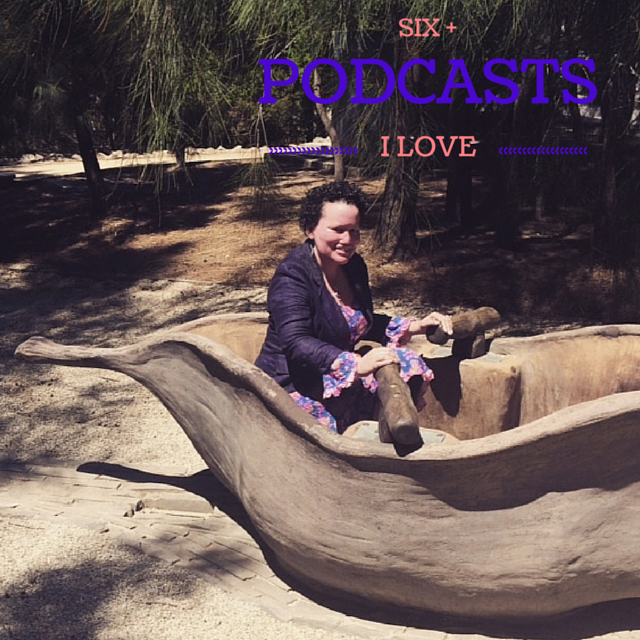
Carly Findlay in seedpod sculpture, melbourne


I’ve been listening to podcasts for years. Maybe since 2005? I love them. I listen while I am writing, before sleep, and sometimes if I am doing a repetitive task like spreadsheets or transposing minutes. I learn so much, and hear about a lot of interesting people doing interesting things. (Also, I'm sitting in a giant gumnut pod up there!)

What is a podcast?

A podcast is a portable, on demand (POD) show. It might be a recording of a radio show, or a show recorded only as a podcast for download, or a playlist of music (like running podcasts).

How to listen to podcasts

Some podcasts can be downloaded (saved and/or streamed) from program websites. Many are linked to radio programs and can be streamed through their websites.
You can also download podcasts through apps on your computer, tablet or phone. I listen to mine on my iPad and iPhone. You can download through iTunes (this is how I listen to them) or other apps such as Stitcher. A list of 10 great podcasting apps for many operating systems can be found at Tom's Guide.

It seems podcasts are becoming more popular now - SO many friends got into Serial - they perhaps didn’t listen to podcasts before? I might have been the only person who didn’t get into Serial. I drifted off every time I listened.

But here are some I enjoy.

This American Life

This American Life features two or three true stories narrated or discussed. It’s enthralling. My two favourite recent stories were the Batman episode (which is also on Invisiblia - a TAL spinoff) and an episode about trolling.

Batman was about the low expectations people place on those with disabilities, and how if we give the disabled a chance, they can achieve.

From the episode:
"[He] began to wonder if maybe, just maybe...low expectations for what blind people could do was in some way actually limiting the blind people..."

And the trolling episode featured one of my favourite writers Lindy West who talked about how she confronted her most horrible troll. So interesting. Trolls walk amongst us.

TedTalk Radio Hour

The TedTalk Radio Hour features excerpts of TedX Talks, grouped into a theme. It's meaty stories in bite sized chunks.

I recently listened to one episode about secrets, where the founder of PostSecret talked about how receiving the secrets in the mail every day is like Christmas.
The NPR podcasts are fantastic!
And so are the ABC Radio ones!

Life Matters

Life Matters on ABC Radio National features fantastic conversations about current issues, hosted by one of my favourite presenters, Natasha Mitchell. I was so excited to chat with Natasha on Life Matters two years ago.

Wilosophy

Hosted by comedian Wil Anderson, Wilosophy is a podcast featuring conversations with Wil’s friends who are doing great things. As the name suggests, they talk about their philosophies. I love the length of the podcasts because it allows Will and his interviewee to get into a lot of detail. The chat he had with Kurt Fearnely was fantastic. Wil is empathetic, intelligent and curious. I’d LOVE to be interviewed by Wil!

The Osher Gunsberg Podcast

This is another conversation style podcast. I do enjoy this one because his mantra is to talk to people who work at doing things they really love. Again, I’d love to be a guest. I LOVED hearing the Darren Hayes podcast - I remember being immersed in it while I was in the Chicago hostel. (Also, Darren had a great podcast last year and a new one this year - tune into He Said He Said.)

Conversations with Richard Fidler

This one from ABC Radio features conversations with well known and not so well known people. I love Richard’s interviewing style - he asks personal but never uncomfortable questions that put the guests at ease. I was recently engrossed in the conversation with missing person's advocate Loren O'Keeffe, and I also loved appearance activist Robert Hoge's chat. Richard is another person I'd love to talk to.

Notice a pattern here? I love to listen in on conversations. I love hearing about people’s lives. I love a chat.

And there’s plenty more that I love! KCRW Good Food, American Splendid Table, RadioTonic, RN 360, Background Briefing, The Smart Passive Income Podcast, Reply All, So You Wanna Be a Writer?...the list goes on. I am such a podcast nerd!
seedpod sculpture, melbourne


How to make a podcast

You can make basic podcasts on SoundCloud. I made one last year as a part of the Blog With Pip course. I made a list of things to talk about and just ad-libbed when the record button was on. I shared the link on Facebook. But I much prefer more professional sounding podcasts, and you can do this with microphones and sound recording software. The ABC has a more comprehensive guide to making podcasts if you want to explore further.

Podcasting is really on my list of things to do - I love them! Maybe in 2016.

Do you love a podcast? What do you recommend?

26 January 2015

Using social media mindfully and for social good is not graffiti.


Saying social media has as much place as graffiti frightens and disappoints me no end.

I'm one of many, many people using social media for social good, and these words feel closed minded, insulting and callous.

I'm tired of people who don't use social media getting prickly at the thought of what might be happening online without even taking a look.

Social media fosters diverse, important discussion. It is also used to entertain, educate, connect and let a broad audience know how policies, prices and change impacts on individuals. It’s a public, current census, identifying the state of the world. And graffiti is not just ugly scrawl. Have you seen Hosier Lane?

I am tired of people who don’t use social media tell me that it’s dangerous, pointless and reputation ruining. I feel sad that such people will never open their minds to the connection and change that social media can bring.

They’ll never know how wonderful it is to form a friendship with a like-minded person from across the world. 

They'll never know the satisfaction of being offered writing and speaking work after a company discovers them on twitter. 

They'll never know how life affirming it is to connect with others who have a rare severe illness after half a lifetime of being alone.

They'll never know the relief of someone who has lost everything receiving support after a natural disaster - through generous, can-do people banding together online.

They’ll never know the chills experienced receiving an email to tell them their words have changed their life for the better - because until they came across a blog or a tweet, they thought they were all alone.

They’ll never understand how program we watch or listen to alone can be turned into a community event with the second screen.

They’ll never know how a blog’s following can raise $20 or $200,000 for people in need.

They’ll never be able to experience the pride of taking an online community into an offline community.

I can't begin to tell you how frustrating it is having to prove that I'm using social media for good - because attitudes against social media combined with inexperience set the standard. In a meeting with a superior, I was told that there are concerns that I am too passionate about social media, disability and appearance diversity, and this might be a problem. When I invited them to have a read of my blog and social media, I was told they don't use the medium. 

I am accountable for everything I write online, and I am happy for anybody to read what I’ve written. I use social media mindfully, at all times. And if it wasn’t for my positive work on social media, other leaders would not be asking me to work for them. It is confidence shattering hearing people tell you they don't believe in what you do because it involves social media.

Of course social media is used poorly. I’ve been on the receiving end of poor use. Hell, I’ve occasionally made some poor choices when on social media, I regret losing a few friendships through it. People are bullied online. Reputations are ruined. Information is leaked, or misinformation spread. I’ve seen some terrible hate speech. I see it every day. But I see - and experience - how the good outweighs this negativity thousandfold.

But these people - the ones who don’t use social media, who think it has no purpose, dangerous even - have got to start trusting those who use it well. Enough with encouraging employees to dob in their colleagues. Enough with the distrust yet lack of willingness to explore the positive options.

Base model behaviour on those who who using social media for social good, and not on those who aren’t using it well at all. I challenge whoever it is that alerts those in charge about bad things happening on social media, to alert them to the good things too. 

See that anteater up there? That photo was taken when I was walking through East London. There's a bit of scrawl around it, but the thing that stands out is the beautiful artwork. Look at the detail, the dedication to create and preserve it.  And that's the same as with social media. There's some negative talk, but it's overwhelmingly positive, if you just take the time to explore.

What I do through blogging and my social media channels to create social change is more than just illegal scrawl on an abandoned train.

24 March 2014

On activism and speaking up. Does it make me the fun police?


"Our lives begin to end the day we become silent about things that matter."  ~ Martin Luther King, Jr.

I'm pretty outspoken, saying what I think, telling people I don't agree, and reasoning why there's a different way of thinking. Just over the weekend I told a sales assistant who was glued to his phone while serving my Mum at the market that serving her is just as important as his phone call. Since I've been blogging here and using social media, I've been more vocal than ever in speaking up about the things that matter. These aren't just the things that matter to me, but the things that matter for equality, kindness, harmony and empathy.

Last week a friend made ableist remark on Facebook (no offence intended, of course). Another friend made a racist remark about women wearing burkas (or balaclavas, as they said). I called them both out on it, publicly. My responses were "wow" to the ableist remark, and "If you're referring to a burka, then it's not a balaclava. It's cultural dress. The woman probably isn't going to go skiing nor rob a bank. How lucky we are to have freedom to express and uphold our culture through our dress, without being discriminated against." (And then I saw a meme saying "counting peoples' sins doesn't make you a saint" - oh the irony!)

It got me thinking. Does calling out prejudice - like ableism, racism and homophobia make you seem superior or easily offended, or strong? Is it a way to influence people or lose friends?

As an activist, I constantly think about people see me as a victim or over sensitive for speaking up or blogging about ableism or discrimination issues. I wonder if people think I'm a whinger or the fun police? Am I a busy-body when I comment on things that aren't directed at me? Am I a sanctimonious bore? And then it's tiring having to explain why something is discriminatory or offensive when a person says "but language evolves, it's ok to use retard", or "I wasn't intending to offend". Or even having an opinion based on experience rather than viewing a program out of choice. I can no longer count the amount of arguments I've had due to my stance on Embarrassing Bodies. I have an opinion on it - based on my own experience and observations of how others react - but I won't watch it. And I think that's ok.

Some friends constantly advocate on social media for equality. Like, more than I do. They share articles, photos, rants and blogs. They're forever battling with peoples' prejudice beliefs - reasoning, providing evidence and experience and sometimes blocking. I wonder if they're tired?

I recently prefaced a conversation with 'I made international news for speaking up about discrimination, but I'm not a victim'. This was because I was involved in what became a heated discussion about discrimination towards people with disabilities by taxi drivers and someone suggested that there is a lot of victim playing happening. I added that while lots of things are said to me about how I look on a daily basis, I don't write about all of them. I don't apply the word discrimination lightly in my own circumstances.

I don't want to remain quiet when I see injustice. If something discriminatory happens to me or someone I know, I'm going to speak up about it. It's cathartic, raises awareness and creates results if I speak up on social media (I have had a difficult time getting what I need on my upcoming flights - even speaking to someone in the special handling departments has been doffiuclt, and social media seems the only way I get results.) It's standing up for what's right.

And there's this.

"The standard you walk past is the standard you accept."

(Watch this speech. Just watch it.)

There are standards I won't accept. I will say something if a friend is racist. I will say something if the R word is used. I will politely speak up if it's a friend, family member, colleague, relative or, if it's safe to do so, a stranger. I will raise awareness about things that matter to reduce discrimination.

I do wonder (not worry) about what people think of me when I advocate for equality, call out prejudice or openly make a complaint about discrimination. But then I remember, it is making a difference in some way. It's showing strength and integrity.

And it might even lead to people talking about my activism.

(Julie McKay who is the director of UN Women Australia told me: "Carly - we are at the UN Commission on the Status of Women in NY. It's the UN's policy forum on gender issues. Your blog/ work was mentioned in a side event on media/ access to information. Really global!")

It's easier not to speak up on occasion. Reasoning can be tiring. But I'd always wish I had have said something in hindsight.

Do you speak up against injustice? How do people react? Is there a time you wish you hadn't?


LinkWithin

Related Posts with Thumbnails